Chitwan National Park Jungle Safari Tour - 4 Days
Start
1
Country
Nepal
Difficulty
Easy
Destination
Chitwan National Park
Activity
Wildlife Tour
Accommodation
Hotel/Lodge
Meals
Breakfast, Lunch & Dinner
Transportation
Private Transportation/Fight
Max Altitude
1200m
Group Size
2 to 20 people
Trip Starts
Kathmandu
Trip Ends
Kathmandu
Best Season
Whole Year
Overview
Key Highlights of the Chitwan Jungle Safari
- Explore the wild landscapes of Chitwan National Park, a UNESCO World Heritage Site.
- Enjoy an exciting elephant safari or jeep safari through grasslands and forest trails.
- Spot one-horned rhinos, deer, monkeys, and other wildlife in their natural habitat.
- Glide along the Rapti River on a traditional canoe ride.
- Discover jungle trails and wildlife signs during a guided nature walk.
- Watch colorful birds during a peaceful birdwatching excursion.
- Visit the Elephant Breeding Centre and learn about elephant care and conservation.
- Experience the lively rhythms of Tharu traditional dance and music.
- Browse Sauraha’s local markets for handicrafts, souvenirs, and regional products.
- Enjoy a memorable blend of wildlife, nature, culture, and adventure in four days.
Why Choose Best Heritage Tour for Your Chitwan Jungle Safari?
- Free airport pick-up and drop-off service
- Online pre-trip briefing and booking confirmation for better preparation
- Multiple communication channels (Phone, Email, WhatsApp, Viber) for easy support
- 24/7 customer support available at +977-9851149197 / +977-9810043046
- Simple and secure payment options including Cash, Card & Bank Transfer
- Free luggage storage facility at Best Heritage Tour store during the tour
- We plant a tree in the name of travelers (upon request), as a part of our commitment to sustainable tourism
Chitwan Jungle Safari Route Overview
The Chitwan Jungle Safari offers a thrilling 3-night, 4-day experience in Chitwan National Park, a UNESCO World Heritage Site celebrated for its incredible biodiversity. Spanning 932 square kilometers of lush Terai lowlands, this park is a sanctuary for remarkable wildlife, including the elusive Bengal tiger, the majestic one-horned rhinoceros, Asian elephants, and over 650 species of vibrant birds.
Your adventure kicks off with exhilarating jeep safaris, guiding you deep into the heart of the jungle, where wildlife encounters abound. Glide along the tranquil Rapti River on a canoe, where you may spot basking crocodiles and diverse birdlife. For a truly unique perspective, enjoy an unforgettable elephant ride that allows you to traverse the park’s stunning landscapes.
But the Chitwan Jungle Safari is not just about wildlife; it’s also a cultural immersion into the lives of the indigenous Tharu community. Visit traditional villages, savor authentic local dishes, and witness vibrant cultural performances that showcase their rich heritage and customs.
Perfect for families and adventure enthusiasts alike, the ideal time to visit is between October and March when wildlife sightings are at their peak and the weather is pleasantly mild. With customizable itineraries tailored to your interests, booking your Chitwan Jungle Safari is both easy and flexible.
Join Best Heritage Tour for an incredible adventure in Chitwan National Park, where nature's wonders and cultural treasures come together for an unforgettable experience!
What Can You Expect During the Chitwan Jungle Safari?
1. Exciting Wildlife Safari
Explore the natural habitats of Chitwan National Park during a guided elephant safari. Keep watch for one-horned rhinoceroses, deer, monkeys, and other wildlife. Animal sightings depend on the season, weather, and natural conditions, so every safari offers a different experience.
2. Guided Jungle Walk and Nature Discovery
Walk through forest trails, grasslands, and riverbanks with an experienced guide. Learn about local plants, animal tracks, and the park’s ecosystem while observing wildlife from a safe distance. The walk offers a closer look at Chitwan’s diverse natural environment.
3. Peaceful Canoe Ride and Birdwatching
Enjoy a canoe excursion along the Rapti River, where you may spot crocodiles and waterbirds along the riverbanks. Birdwatching adds another highlight, with opportunities to observe colorful and migratory species in Chitwan’s varied habitats.
4. Tharu Culture and Local Experiences
Discover the cultural side of Chitwan through a traditional Tharu dance and music program. You can also browse Sauraha’s local market for handicrafts, clothing, and souvenirs, offering a glimpse into local life beyond the jungle.
5. Comfortable Stay and Guided Activities
Stay at a 3-star hotel or jungle resort in Chitwan, with meals provided during the tour according to the package arrangements. A licensed English-speaking jungle safari guide accompanies the planned activities, helping you understand the region’s wildlife, culture, and conservation efforts.
Are You Ready for the Chitwan Jungle Safari?
To fully enjoy the Chitwan Jungle Safari, travelers should bring a sense of adventure, curiosity about wildlife, and an appreciation for nature and local culture. From exploring jungle trails and gliding along the Rapti River to experiencing Tharu traditions, this tour offers a chance to discover a different side of Nepal beyond its mountain scenery.
Travelers should be prepared for warm weather, outdoor activities, and the possibility that wildlife sightings can vary. Following the guide’s instructions, respecting animals and their natural habitat, and wearing comfortable clothing and walking shoes will help make the journey safe, enjoyable, and memorable.
Itinerary
1Day 1 – Travel from Kathmandu or Pokhara to Chitwan
The first day of your 4-day Chitwan National Park tour will bring you to the park headquarters in Sauraha. Upon your arrival at the hotel, you may dedicate the remainder of the day to discovering the city and its nearby attractions. Sauraha features a vibrant market where you can purchase local handicrafts, apparel, and mementos. You can also visit the Elephant Breeding Centre, which is home to over 70 elephants, including babies. Here, you will have the opportunity to gain insights into elephant breeding and its significance in the park's conservation initiatives. In the evening, you can take part in a cultural program with traditional Taru dance and music. The Taru people are indigenous to the region and have a unique culture and way of life. This program presents an excellent chance to immerse yourself in local traditions while enjoying an energetic music and dance performance.
2Day 2 – Immersive Jungle Adventures within Chitwan National Park
Day 2 of your 4 day Chitwan National Park tour will see you exploring the park on foot and by boat. After breakfast, you will depart for a jungle hike with an experienced guide. The hike will take you through dense forests, grasslands and riverbanks. You will have the opportunity to observe a variety of wildlife, including deer, monkeys, wild boars and many types of birds. Your guide will also explain the park's ecosystem, conservation efforts and the different flora and fauna species you will encounter.
Following your jungle trek, embark on a canoe excursion along the Rapti River. The river is home to crocodiles, otters and a variety of water birds. As you float down the river, you can view wildlife from a different perspective and enjoy the tranquil surroundings.
3Day 3 – Jungle Adventures in Chitwan National Park
Day 3 of your 4 day Chitwan National Park tour package will see you explore the park on the back of an elephant. After breakfast, head to the park's elephant house where you will meet the gentle giants for the day. The elephants are well trained and well looked after, and the safari is a unique opportunity to get up close and personal with wildlife.
During the safari, you will traverse grasslands and woodlands, remaining vigilant for sightings of rhinos, tigers, and various other wildlife. Your mahout (elephant guide) will introduce you to different species of birds and tell you interesting facts about them. The safari will last approximately three hours, after which you will return to the hotel for lunch.
In the afternoon, engage in bird watching with a knowledgeable local guide. Chitwan National Park is home to over 500 bird species, including endangered species such as the Bengal florican and the Oriental stork. Your guide will help you identify different birds and provide information about their habits and habitats.
4Day 4 - Depart for Destination
On the last day of your Chitwan National Park jungle safari tour, check out of your hotel and depart Chitwan. If you have time, you can visit the park's museum and visitor center to learn about the park's history, geography, and wildlife. You can also purchase souvenirs and crafts at the park's gift shop.
Cost Includes / Excludes
Included
- PRIVATE AIRPORT PICK-UP & DROP : Airport - Hotel transfer - Airport (Pick Up and Drop).
- MEMBER TRANSPORTATION : Transportation in a standard tourist bus from Kathmandu to Chitwan and while returning from Chitwan to Kathmandu.
- ACCOMMODATION : Accommodation in best available 3 Stars Hotel or Jungle Resort.
- FOOD : 3 meals a day (breakfast, lunch, and dinner; including tea/coffee) during the tour.
- ACTIVITIES IN CHITWAN : Activities in Chitwan National Park like Jeep safari, Bird watching, Jungle walk, Canoe ride, etc.
- GUIDE : One experienced government licensed (English speaking) Jungel Safari guide during the tour & safari.
- STAFF SALARY AND ALLOWANCE : All staff wages, salary, equipment, food & clothing.
- PERMITS : Chitwan National Park permit & other entry fee.
- STAFF INSURANCE : Insurance for all staff involved during the tour.
- SOUVENIR : Best Heritage Tour’s Purse, an authentic Nepali product made from hemp.
- FAREWELL DINNER : A farewell dinner with an authentic cultural program after completion of the tour.
Excluded
- INTERNATIONAL AIRFARE : International flight airfare (from and to Kathmandu).
- NEPAL VISA FEES : You may issue the visa upon your arrival at Tribhuvan International Airport - Kathmandu or apply manually in your home country.
- ACCOMMODATION & MEALS : Accommodation and meals in Kathmandu before and after the tour.
- INSURANCE POLICY : Travel insurance covering medical expenses is mandatory. If you do not have suitable coverage, we can also assist in arranging travel insurance for you upon your arrival in Nepal. Check Over Here
- PERSONAL EXPENSES : Clothing & gears, telephone, laundry, soft drinks and any Alcoholic beverages.
- TIPS : Tips for guide and driver.
- EXTRA : Any additional costs due to factors beyond our control, or for services not specifically mentioned in the Itinerary & Included section.
- TAXES & SERVICE CHARGE : All government taxes (13%) and service charge (10%).
Trip Info
Useful Information About the Chitwan Jungle Safari
The Chitwan Jungle Safari is a four-day nature and wildlife experience combining a scenic journey from Kathmandu, jungle activities, river excursions, and cultural encounters in Sauraha. Understanding practical details such as transportation, accommodation, meals, park permits, safari activities, weather, clothing, and wildlife safety helps travelers prepare for a comfortable and memorable adventure in Chitwan National Park.
Airport Pickup and Trip Briefing for the Chitwan Jungle Safari
Best Heritage Tour provides airport pickup and drop-off services in Kathmandu for guests arriving from abroad. Upon arrival at Tribhuvan International Airport, our representative will warmly welcome you and assist with your transfer to the hotel in Kathmandu using a private vehicle suitable for your group size. As a gesture of traditional Nepali hospitality, we offer a Khada (ceremonial scarf) to greet our guests. If you require accommodation in Kathmandu before or after the tour, our team will be happy to assist with arrangements.
Trip Briefing Session in Kathmandu
Before beginning your Chitwan Jungle Safari, Best Heritage Tour will organize a trip briefing session to help you prepare for your wildlife adventure. During this session, our team will explain the four-day itinerary, introduce the activities included in the tour, and provide essential information about your journey to Chitwan National Park.
This briefing helps guests understand what to expect during their Chitwan Jungle Safari, from exploring the forests and grasslands of Chitwan National Park to experiencing the traditional culture of the Tharu community.
What Type of Transportation is Used for the Chitwan Jungle Safari?
At Best Heritage Tour, we arrange comfortable and reliable transportation for your Chitwan Jungle Safari, ensuring a smooth journey between Kathmandu and Chitwan National Park. Our package includes transportation by standard tourist bus from Kathmandu to Chitwan and from Chitwan back to Kathmandu.
Transportation Details for the Chitwan Jungle Safari
|
Route |
Mode of Transport |
Approx. Distance |
Travel Time |
|
Kathmandu → Chitwan (Day 1) |
Standard Tourist Bus |
160-180 km / 99-112 miles |
5-7 Hours |
|
Chitwan → Kathmandu (Day 4) |
Standard Tourist Bus |
160-180 km / 99-112 miles |
5-7 Hours |
Note: Travel distances and driving times are approximate and may vary depending on traffic, road conditions, weather, and the exact departure and arrival points.
What Type of Accommodation Is Available on the Chitwan Jungle Safari?
At Best Heritage Tour, we arrange comfortable accommodation in Chitwan to ensure a relaxing stay throughout your jungle safari adventure. Our package includes accommodation in a best available 3-star hotel or jungle resort in Sauraha, near Chitwan National Park. These accommodations offer a welcoming atmosphere, essential modern amenities, and a convenient base for exploring the surrounding wildlife and cultural attractions.
Note: Accommodation in Kathmandu before and after the Chitwan Jungle Safari is not included in our standard package.
Foods and Drinks on the Chitwan Jungle Safari
At Best Heritage Tour, we ensure that guests enjoy satisfying meals and refreshing drinks throughout their Chitwan Jungle Safari. The package includes three meals a day - breakfast, lunch, and dinner - with tea or coffee, allowing you to enjoy a variety of local and international dishes during your stay.
Chitwan offers a wonderful opportunity to experience the traditional food culture of Nepal's Terai region. Along with familiar meals, guests can explore authentic Tharu cuisine and discover the unique flavors of the local community.
What Food Can You Expect During the Tour?
During your stay in Chitwan, meals are generally served at your hotel or jungle resort. Depending on the accommodation and available menu, you can enjoy a selection of Nepali, Indian, and international dishes.
Typical meal options may include:
-
Breakfast: Bread, eggs, toast, pancakes, porridge, and tea or coffee.
-
Lunch: Traditional Nepali dal bhat, rice, vegetables, noodles, or other available dishes.
-
Dinner: A variety of local and international meals, including rice, curry, vegetables, and seasonal specialties.
-
Drinks: Tea, coffee, and drinking water according to the package arrangements.
Meal options may vary depending on the hotel or resort. Guests with specific dietary requirements are encouraged to inform Best Heritage Tour in advance so that suitable arrangements can be discussed.
Can I Try Authentic Tharu Cuisine on the Chitwan Jungle Safari?
Yes! The Chitwan Jungle Safari offers an excellent opportunity to experience authentic Tharu cuisine and explore the traditional food culture of the indigenous Tharu community. Guests can enjoy local specialties that reflect the agricultural lifestyle, natural surroundings, and culinary traditions of Nepal's Terai region.
One particularly interesting local delicacy to try is Ghungi, a traditional Tharu dish prepared using freshwater snails. It is commonly cooked with local spices and herbs, creating a distinctive flavor that adventurous food lovers may enjoy.
When Is the Best Time for the Chitwan Jungle Safari?
The Chitwan Jungle Safari can be enjoyed throughout the year, but October to March is generally a favorable period for wildlife viewing, jungle activities, and cultural experiences. During these months, temperatures are usually more comfortable, making it easier to explore Chitwan National Park through guided jungle walks, canoe rides, birdwatching, and other safari activities.
Chitwan Jungle Safari in Autumn: October to November
Autumn offers pleasant weather and comfortable conditions for exploring Sauraha and Chitwan National Park. The landscape remains green after the monsoon, while clearer skies create attractive conditions for sightseeing and photography. It is a suitable season for combining jungle activities with visits to local villages and cultural experiences.
Pros:
-
Comfortable temperatures for outdoor activities
-
Generally clearer skies and good visibility
-
Green landscapes following the monsoon
-
Suitable conditions for canoeing and guided jungle walks
-
Opportunities to observe a variety of wildlife and birds
Cons:
-
Popular travel period with more visitors
-
Accommodation may be busier during peak dates
-
Wildlife sightings are never guaranteed
Chitwan Jungle Safari in Winter: December to February
Winter is a popular season for visiting Chitwan because daytime temperatures are often pleasant for outdoor exploration. Morning fog can occur, particularly near rivers and grasslands, but conditions often improve later in the day. This season is also suitable for birdwatching, as many migratory birds visit the region.
Pros:
-
Mild daytime weather for jungle activities
-
Good opportunities for birdwatching, including migratory birds
-
Comfortable conditions for cultural sightseeing
-
Often favorable conditions for wildlife observation
-
Pleasant afternoons for exploring Sauraha
Cons:
-
Early mornings and evenings can be chilly
-
Fog may occasionally reduce visibility
-
Warm clothing may be needed for morning activities
Chitwan Jungle Safari in Spring: March to May
Spring brings warmer temperatures and vibrant natural surroundings to Chitwan National Park. As the weather becomes hotter, wildlife may gather around rivers and water sources, creating opportunities for observation. This season is also suitable for birdwatching and enjoying the park's diverse landscapes. However, temperatures can rise considerably, especially during April and May.
Pros:
-
Opportunities to observe wildlife near water sources
-
Good conditions for birdwatching
-
Lush vegetation and attractive natural scenery
-
Suitable for exploring local culture and traditions
-
Longer daylight hours for outdoor activities
Cons:
-
Hot temperatures, particularly in April and May
-
Midday outdoor activities may feel uncomfortable
-
Pre-monsoon showers and thunderstorms may occur
-
Humidity can increase toward the end of spring
Chitwan Jungle Safari During Monsoon: June to September
The monsoon season transforms Chitwan into a lush green landscape filled with dense vegetation and flowing rivers. This period offers a different perspective of the national park, particularly for travelers interested in nature and seasonal scenery. However, heavy rainfall can affect road conditions, river activities, and jungle excursions. Wildlife may also be harder to spot when vegetation becomes dense.
Pros:
-
Beautiful green forests and grasslands
-
Fewer visitors during some periods
-
Fresh natural scenery and flowing rivers
-
Opportunities to experience the park during its rainy season
-
Suitable for travelers who enjoy quieter nature experiences
Cons:
-
Heavy rainfall and high humidity
-
Possible delays or changes to outdoor activities
-
Dense vegetation can make wildlife observation difficult
-
Leeches and insects may be more common
-
Road conditions and river levels can affect travel plans
Is Chitwan Jungle Safari Possible During the Monsoon Season?
Yes, the Chitwan Jungle Safari is possible during the monsoon season, but flexibility is important. Heavy rain, rising river levels, and wet trails may affect activities such as canoeing and jungle walks. Some excursions may be rescheduled or adjusted according to weather conditions and park regulations.
Best Heritage Tour recommends carrying rain protection, wearing suitable footwear, and following the instructions of local guides during this season.
Is Chitwan Jungle Safari Possible During Winter?
Yes, winter is a suitable time for a Chitwan Jungle Safari. Daytime temperatures are often comfortable for outdoor exploration, although early mornings and evenings can be cold. Morning fog may occasionally affect visibility, but it often clears as the day progresses.
Travelers visiting between December and February should bring warm clothing for early departures and evening cultural programs.
What Is the Recommended Season for the Chitwan Jungle Safari?
Best Heritage Tour Recommendation: October to March is a favorable period for the Chitwan Jungle Safari, offering a combination of comfortable daytime temperatures, opportunities for wildlife observation, and enjoyable outdoor activities.
The tour is available in other seasons as well. Travelers visiting during spring or monsoon can still enjoy Chitwan's natural beauty and cultural experiences, provided they prepare for warmer temperatures or changing weather conditions.
What Are the Permits Required for the Chitwan Jungle Safari?
Chitwan National Park is a protected area in Nepal, and visitors must obtain the required entry permit before participating in activities inside the park. For the Chitwan Jungle Safari, the main permit is the national park entry permit, which is required for visitors entering the protected area.
Chitwan National Park Entry Permit
The national park entry permit allows visitors to enter Chitwan National Park for authorized activities, such as wildlife observation and guided jungle excursions. Entry fees are:
|
Visitor Category |
Entry Fee |
|
Nepali citizens |
NPR 150 |
|
SAARC nationals |
NPR 1,000 |
|
Other foreign nationals |
NPR 2,000 |
|
Children below 10 years |
Free |
Types of Safaris in Chitwan National Park
Chitwan National Park offers a variety of safari experiences, allowing travelers to discover its rich wildlife, diverse landscapes, and local culture. From exploring forest trails on foot to gliding along the Rapti River, each activity provides a different perspective of the natural beauty of Chitwan.
During the Chitwan Jungle Safari with Best Heritage Tour, guests can enjoy several wildlife and cultural experiences, depending on the itinerary and activity arrangements.
1. Jeep Safari in Chitwan National Park
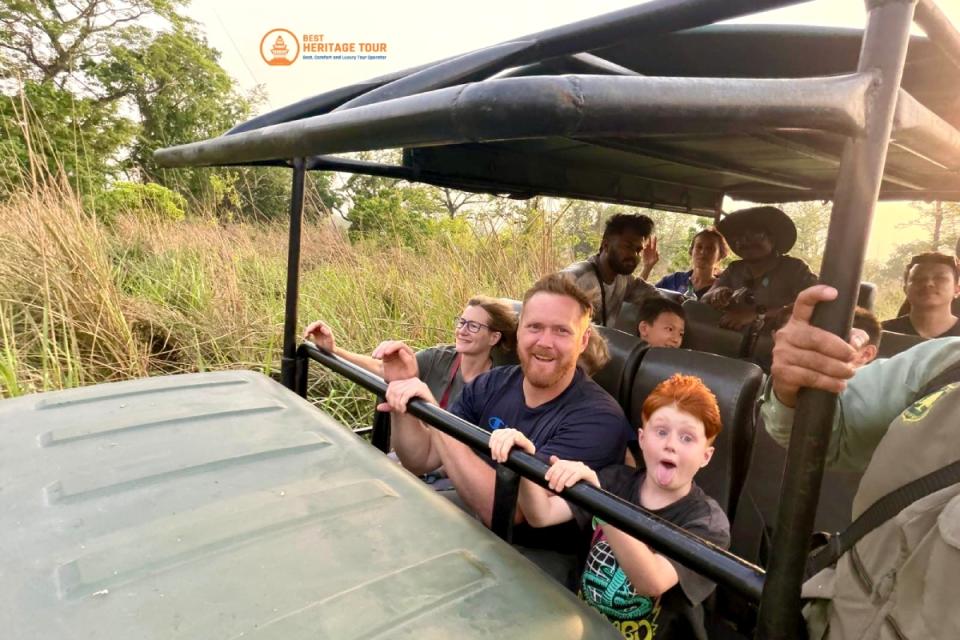
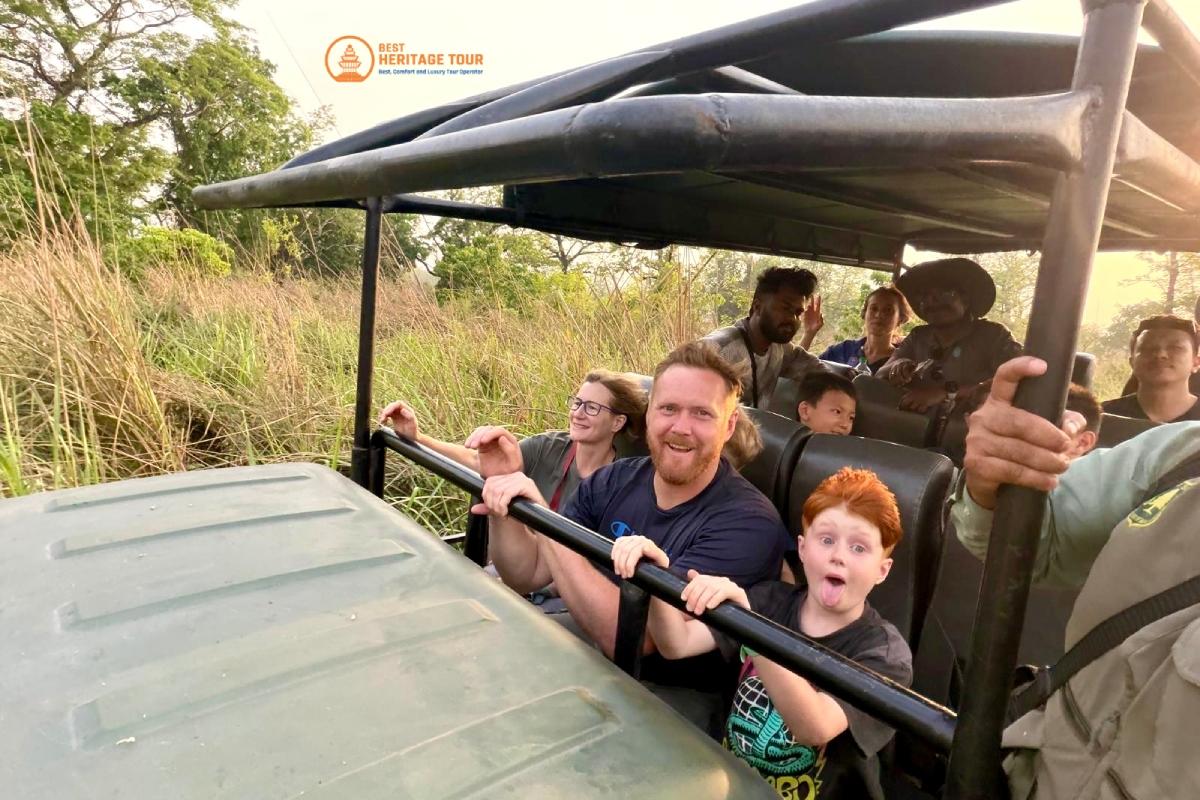
A jeep safari offers an opportunity to explore the grasslands, forests, and wildlife habitats of Chitwan National Park by vehicle. Accompanied by an experienced naturalist or guide, travelers can look for one-horned rhinoceroses, deer, wild boars, and various bird species. Jeep safaris are also a popular option for covering larger areas of the park while enjoying its natural scenery.
2. Elephant Safari in Chitwan
An elephant safari provides a traditional way to explore Chitwan's forest and grassland environments from an elevated position. Travelers may have opportunities to observe wildlife and learn about the surrounding ecosystem. Elephant safari practices and availability can vary, so guests should confirm the activity arrangements and animal welfare standards before participating.
3. Canoeing Safari on the Rapti River
A canoe ride along the Rapti River offers a peaceful way to observe Chitwan's aquatic environment. During the excursion, travelers may spot crocodiles resting along the riverbanks, water birds, and other wildlife near the water. The calm river journey also provides beautiful views of the surrounding forests and natural landscapes.
4. Guided Jungle Walk in Chitwan
A guided jungle walk allows travelers to explore the natural surroundings of Chitwan National Park on foot. Accompanied by an experienced guide, visitors can learn about animal tracks, forest plants, bird calls, and the behavior of different wildlife species. Walking through the forest and grasslands offers a closer understanding of the park's ecosystem while requiring careful attention to wildlife safety instructions.
5. Birdwatching Tour in Chitwan
Chitwan is an excellent destination for birdwatching, with a wide variety of resident and migratory bird species. Guided birdwatching excursions introduce travelers to the park's diverse birdlife, including kingfishers, storks, eagles, and other wetland and forest birds. With patience and guidance from a knowledgeable local naturalist, visitors can observe birds in their natural habitats and learn about their behavior and conservation.
6. Tharu Cultural Tour and Village Experience
A Tharu cultural experience introduces travelers to the traditions, lifestyle, and heritage of the indigenous Tharu community of the Chitwan region. Guests may explore local villages, learn about traditional houses and farming practices, and enjoy cultural performances featuring traditional music and dance. This experience adds a cultural dimension to the jungle safari and provides insight into the relationship between local communities and their natural surroundings.
What Types of Animals and Birds Can You See in Chitwan National Park?
Chitwan National Park is one of Nepal's most important wildlife destinations, known for its diverse mammals, birds, reptiles, and rich natural habitats. Chitwan National Park supports more than 68 mammal species and 546 bird species which makes it a rewarding destination for nature lovers, photographers, and birdwatchers.
During the Chitwan Jungle Safari with Best Heritage Tour, guests may encounter animals such as the greater one-horned rhinoceros, deer, monkeys, and wild boars. The park is also home to the Royal Bengal tiger, although spotting this elusive predator in the wild is not guaranteed.
Wildlife Found in Chitwan National Park
The following table highlights some of the mammals and birds that visitors may encounter during a Chitwan jungle safari. Actual sightings depend on the season, habitat, weather, and animal activity.
Common Sighting Animals & Birds During Safari
|
Animals and Mammals |
Birds |
|
Greater one-horned rhinoceros |
Indian peafowl |
|
Spotted deer (Chital) |
White-throated kingfisher |
|
Sambar deer |
Common kingfisher |
|
Hog deer |
Egrets |
|
Wild boar |
Herons |
|
Rhesus macaque |
Cormorants |
|
Hanuman langur |
Painted stork |
|
Golden jackal |
Asian openbill |
|
Mugger crocodile |
Bee-eaters |
|
Gharial crocodile |
Indian roller |
|
Royal Bengal Tiger (Rare) |
Woolly-necked stork |
Is Chitwan National Park the Best Place to See Rhinos and Tigers in Nepal?
Chitwan National Park is one of Nepal's principal destinations for observing greater one-horned rhinoceroses and Royal Bengal tigers in their natural habitat. Its extensive grasslands, forests, wetlands, and river systems provide important habitats for both species.
However, wildlife sightings are never guaranteed. Rhinos are generally easier to spot during safari activities, while tigers are elusive and may remain hidden in dense vegetation.
Latest Rhino Population in Chitwan National Park: 694 rhinos
Latest Tiger Population in Chitwan National Park: 145 tigers
What Is the Difference Between Seeing Rhinos and Tigers in Chitwan?
-
Rhinos: More frequently encountered during wildlife excursions, particularly in open grasslands and near water sources.
-
Tigers: Much harder to spot because of their secretive behavior and preference for dense vegetation.
-
Other wildlife: Deer, monkeys, wild boars, crocodiles, and numerous bird species may also be observed during safari activities.
With experienced local guides, suitable timing, and patience, visitors can enjoy a rewarding wildlife experience while learning about Chitwan's biodiversity and conservation efforts.
How Much Area Does Chitwan National Park Cover?
Chitwan National Park covers 952.63 square kilometers (km²), making it one of Nepal’s major protected areas. The park extends across parts of Chitwan, Nawalpur, Parsa, and Makwanpur districts and encompasses subtropical forests, grasslands, river systems, wetlands, and the Churia hills.
The park was established in 1973 as Nepal’s first national park and was designated a UNESCO World Heritage Site in 1984. Its current area of 952.63 km² (95,263 hectares) reflects a boundary adjustment made in 2016.
Quick Facts:
|
Detail |
Information |
|---|---|
|
Total Area |
952.63 km² |
|
Equivalent |
95,263 hectares |
|
Established |
1973 |
|
UNESCO World Heritage |
1984 |
|
Buffer Zone |
729.37 km² |
How Difficult Is the Chitwan Jungle Safari?
The Chitwan Jungle Safari is a very easy tour, making it suitable for travelers who want to experience Nepal's wildlife and natural beauty without demanding physical activities. Most activities involve short walks, boat rides, wildlife observation, and sightseeing rather than strenuous hiking. The guided jungle walk may involve walking on uneven forest trails, but it is generally manageable for travelers with basic mobility and a reasonable level of comfort walking outdoors.
At Best Heritage Tour, we organize the experience to help guests enjoy Chitwan National Park at a relaxed pace while discovering its wildlife, landscapes, and local culture.
Is the Chitwan Jungle Safari Suitable for Seniors and Families with Kids?
Definitely! The Chitwan Jungle Safari is suitable for seniors and families with children who want to enjoy a nature-based holiday together. Its relaxed itinerary, comfortable accommodation, and variety of wildlife and cultural activities make it an enjoyable option for different age groups.
Children can discover fascinating animals, observe birds, and learn about nature, while seniors can appreciate the peaceful surroundings and cultural experiences. With appropriate supervision for children and consideration of individual mobility needs, the Chitwan Jungle Safari offers a memorable wildlife adventure for families and travelers of different ages.
What Type of Guide Is Provided on the Chitwan Jungle Safari?
At Best Heritage Tour, we arrange an experienced, government-licensed English-speaking jungle safari guide to accompany guests during their wildlife adventures in Chitwan National Park. With knowledge of the local environment, wildlife, and park regulations, the guide helps make each safari activity informative, enjoyable, and safe.
What Does the Jungle Safari Guide Do?
Your guide will:
-
Accompany you during jungle safari activities and excursions.
-
Help identify wildlife, birds, plants, and animal tracks.
-
Share information about Chitwan's ecosystem and conservation efforts.
-
Explain park rules and responsible wildlife observation practices.
-
Provide guidance during jungle walks and other outdoor activities.
-
Help you understand the local environment and wildlife behavior.
With an experienced local guide, guests can gain a deeper understanding of Chitwan's natural heritage while enjoying their jungle safari experience.
How Much Does the Chitwan Jungle Safari Cost?
The cost of the Chitwan Jungle Safari for 2026 and 2027 depends on factors such as group size, transportation, accommodation, safari activities, and the services included in the package. Best Heritage Tour offers this four-day wildlife experience for solo travelers, couples, families, friends, and larger groups.
The tour includes transportation between Kathmandu and Chitwan by standard tourist bus, accommodation in a 3-star hotel or jungle resort, meals, and guided safari activities, according to the package arrangements. We can arrange the tour for private groups, with the per-person cost varying according to the number of travelers and their specific requirements.
Group Size-Based Price - Chitwan Jungle Safari (2026 & 2027)
|
Group Size |
Price per Person (USD) |
|
1 Pax |
USD 350 |
|
2-4 Pax |
USD 260 |
|
5-6 Pax |
USD 250 |
|
7-10 Pax |
USD 240 |
|
11-16 Pax |
USD 230 |
|
17-29 Pax |
USD 220 |
Note:
-
13% Nepal Government Tax and 10% service charge are not included in the above prices.
For a detailed quotation or customized cost breakdown, Best Heritage Tour can prepare a personalized proposal based on your group size, preferred travel dates, accommodation preferences, and specific requirements.
Booking & Payment for the Chitwan Jungle Safari
Booking your Chitwan Jungle Safari with Best Heritage Tour is simple, secure, and well-organized. To confirm your trip, a 20% deposit of the total trip cost is required at the time of booking, while the remaining balance must be settled before the tour departure in Kathmandu or Pokhara. We accept cash, bank transfer, or card. Please note that bank transfers and card payments incur a 4% processing fee; must be covered by the tourist. All booking and cancellation terms are clearly explained by Best Heritage Tour staff during the booking process and can also be reviewed on our website.
Bank transfer:
-
Account Name: Best Heritage Tour And Treks Pvt. Ltd.
-
Account Number: 13201040254106
-
Bank Name: Nepal Investment Mega Bank Ltd.
-
Address: Thamel, Kathmandu, Nepal
-
SWIFT Code: NIBLNPKT
-
Bank Transfer Link: www.bestheritagetour.com/payment
Once we receive the deposit, we will issue the official invoice and booking conformation right away. If you need any clarification, we are happy to answer your questions or provide additional details you may require.
Frequently Asked Questions
Are vaccinations needed for the Chitwan Jungle Safari?
It’s recommended to check with your healthcare provider about vaccinations for travel in Nepal.
Are the accommodations eco-friendly during the Chitwan Jungle Safari?
Many lodges and resorts are eco-conscious, implementing practices like solar power, rainwater harvesting, and waste management to minimize their environmental impact. Look for eco-lodges if sustainability is important to you.
Is Wi-Fi available in the rooms at the lodges during the Chitwan Jungle Safari?
Wi-Fi availability varies. Budget accommodations may have limited or no Wi-Fi, while mid-range and luxury lodges usually offer it in common areas or sometimes in rooms, though speeds can be slower in remote areas.
What is the best lodge location for wildlife sightings during the Chitwan Jungle Safari?
Lodges closer to the park's boundaries or buffer zones often offer the best access to safari activities and occasional wildlife sightings from the property itself.
Do accommodations provide drinking water during the Chitwan Jungle Safari?
Most lodges supply safe drinking water or have water filtration systems. It’s generally recommended to bring a reusable water bottle, as bottled water may not always be available or eco-friendly.
Can I request a private or family room at the accommodations during the Chitwan Jungle Safari?
Many lodges have options for private rooms, family rooms, and sometimes interconnecting rooms for larger groups or families traveling together. Make sure to specify this request when booking.
Are there mosquito nets in the rooms at the accommodations during the Chitwan Jungle Safari?
Yes, most accommodations in the park area provide mosquito nets or screens to ensure a comfortable stay, especially during warmer months when insects are more prevalent.
What should I pack for the Chitwan Jungle Safari?
Essentials include light clothing for daytime, warm clothing for cool mornings/evenings, comfortable shoes, insect repellent, sunscreen, and a hat.
Are there any specific clothing recommendations for the Chitwan Jungle Safari?
- Daytime: Lightweight, breathable clothing in neutral colors to avoid startling animals.
- Evenings: Warmer clothing, as temperatures can drop.
- Extras: Rain jacket, sturdy shoes, insect repellent, and sunscreen are essential.
Is there a dress code for cultural activities during the Chitwan Jungle Safari?
For cultural visits, such as the Tharu village tour, dressing modestly (covering shoulders and knees) is appreciated as a sign of respect.
Do I need to be fit for the Chitwan Jungle Safari?
No special fitness level is required, as activities are not physically demanding.
How physically demanding are the activities during the Chitwan Jungle Safari?
Most activities, like jeep safaris and canoeing, are not physically strenuous. Jungle walks may require moderate fitness, but they’re designed to be accessible for most people.
What if I have specific health concerns during the Chitwan Jungle Safari?
Inform your tour operator in advance about any medical conditions. Guides can adjust the itinerary to accommodate your needs
Is it safe to go on a jungle safari in Chitwan?
Yes, safety is prioritized, with experienced guides for all activities. Guests are advised to follow instructions for a safe experience.
What amenities are included in the rooms at the lodges during the Chitwan Jungle Safari?
Standard amenities often include en-suite bathrooms, hot water, basic toiletries, mosquito nets, and comfortable bedding. Mid-range and luxury resorts may offer additional comforts like air conditioning, room service, private balconies, and Wi-Fi.
Are there health facilities near the Chitwan Jungle Safari park?
There are basic medical facilities in Sauraha and Bharatpur, with more advanced hospitals in Kathmandu and Pokhara.
How safe is the wildlife safari in Chitwan?
The safaris are safe if guidelines are followed, as guides are trained to handle potential wildlife encounters. Stay close to the group and follow instructions.
What vaccinations or preventive medications are recommended for the Chitwan Jungle Safari?
Vaccinations for typhoid, hepatitis A, and tetanus are recommended. Discuss malaria prophylaxis with your doctor, as Chitwan is a low-risk zone.
Is there mobile coverage in Chitwan National Park?
Some areas have mobile network coverage, though it may be spotty in remote areas.
Are there ATMs in Chitwan?
Yes, ATMs are available in towns around Chitwan, but it’s advisable to carry some cash.
Can I use my cell phone and access the internet during the Chitwan Jungle Safari?
Mobile coverage is generally available in the park’s buffer zones, but internet access may be limited or slow. Some lodges offer Wi-Fi.
Is it safe to drink tap water during the Chitwan Jungle Safari?
No, it’s best to drink bottled or purified water. Lodges provide safe drinking water.
Do I need to worry about power outages during the Chitwan Jungle Safari?
Power outages may occur, so it’s helpful to bring a power bank or solar charger for electronics.
Are flights to Chitwan included?
Most packages exclude flights. You can book flights from Kathmandu to Bharatpur if you prefer not to travel by road.
What transportation is provided during the Chitwan Jungle Safari?
Local transport includes jeeps, canoes, and sometimes ox carts or bicycles for short distances.
Is it better to fly or drive to Chitwan?
Flying is faster, with a flight time of around 25 minutes from Kathmandu to Bharatpur. Driving allows for scenic views and can be a more budget-friendly option.
Are transfers within Chitwan included in the Chitwan Jungle Safari package?
Yes, packages usually include all local transfers, including airport pick-ups and drop-offs, as well as transport for all safari activities.
Are the animals active year-round during the Chitwan Jungle Safari?
Yes, but the winter season is the best time to spot wildlife, as animals are more active during cooler months.
What activities are included in the Chitwan Jungle Safari?
Activities typically include jeep safaris, canoeing, bird watching, jungle walks, Tharu cultural shows, and elephant breeding center visits.
What is Chitwan National Park known for?
Chitwan National Park is Nepal’s first national park, designated a UNESCO World Heritage Site in 1984, famous for its diverse ecosystem, including rare species like the one-horned rhinoceros, Bengal tiger, and gharial crocodile.
How long are the safari activities each day during the Chitwan Jungle Safari?
Activities typically last 2–4 hours each, allowing plenty of time for relaxation at your accommodation.
What are the main highlights of the Chitwan Jungle Safari?
The safari provides an intimate encounter with the abundant wildlife and varied cultural heritage of Nepal. Highlights include sightings of endangered species like the one-horned rhino and Bengal tiger, scenic canoe rides, bird-watching tours, and engaging with the Tharu community’s culture and traditional dances.
What is the duration of Chitwan National Park's status as a protected area?
Established in 1973 and declared a UNESCO World Heritage Site in 1984, Chitwan National Park is Nepal’s oldest and most famous national park, covering 932 square kilometers of grassland, forest, and river ecosystems.
What can I expect on a typical day during the Chitwan Jungle Safari?
Days start early with a wake-up call for morning activities such as jungle walks or bird watching. After breakfast, you’ll embark on other excursions like a jeep safari or village tour. Afternoons often involve rest time or additional activities, with evenings reserved for dinner and sometimes cultural shows.
What animals might I see during the Chitwan Jungle Safari?
The park is home to over 68 mammal species and 540 bird species, including the Bengal tiger, Asian elephant, one-horned rhinoceros, sloth bear, leopard, gharial crocodile, and various species of deer and monkeys.
What cultural experiences are available during the Chitwan Jungle Safari?
Visitors can participate in a Tharu village tour, which showcases the indigenous Tharu community’s way of life, and enjoy a traditional Tharu dance performance featuring their unique attire, music, and folk dances.
How large are the safari groups during the Chitwan Jungle Safari?
Safari group sizes vary, but private or small group tours (up to 10 people) are common for a more personalized experience. Larger groups may also be available, depending on the package and operator.
Are guides provided during the Chitwan Jungle Safari?
Yes, licensed naturalist guides accompany all tours and activities. These guides are well-versed in the local ecosystem, wildlife behavior, and safety protocols, enhancing your understanding of Chitwan’s unique environment.
When is the best time to visit Chitwan National Park for the jungle safari?
The best time is from October to March when the weather is pleasant, with cooler mornings and evenings. The monsoon season (June-August) is less ideal due to heavy rains.
What’s the typical weather like in Chitwan during the jungle safari season?
Chitwan has a subtropical climate. Winter (November-February) is mild, while summers (April-June) can get hot and humid, with temperatures reaching up to 40°C (104°F).
What should I expect during different seasons in Chitwan National Park?
- Winter (November-February): Dry and pleasant, with temperatures ranging from 7°C (45°F) to 23°C (73°F). Ideal for safaris due to fewer insects.
- Summer (April-June): Hot and humid, 30-40°C (86-104°F). Best for lush landscapes but might be uncomfortable for some due to the heat.
- Monsoon (June-August): Heavy rainfall, 24-33°C (75-91°F). Activities may be limited by rain, and the terrain can get muddy.
What is the Chitwan Jungle Safari?
The Chitwan Jungle Safari is a 3-night, 4-day experience in Chitwan National Park, known for its wildlife, including Bengal tigers, rhinos, elephants, and a variety of bird species. The safari includes guided jungle walks, canoe rides, and cultural programs.
How do I get to Chitwan National Park?
You can reach Chitwan by air (via Bharatpur Airport) or by road (a 5–6-hour drive from Kathmandu).
Do I need a visa to visit Nepal for the Chitwan Jungle Safari?
Yes, international visitors need a visa, which can be obtained on arrival at Kathmandu’s Tribhuvan International Airport.
What’s included in the package price for the Chitwan Jungle Safari?
Most packages cover accommodation, meals, transportation, and guided activities within the park.
Are there any additional costs for the Chitwan Jungle Safari?
You may have additional costs for tips, souvenirs, or any extra personal expenses outside of the package.
Can I pay with credit cards while visiting Chitwan for the Jungle Safari?
Larger hotels and resorts accept credit cards, but it’s best to carry cash for small purchases or at local eateries.
What should I budget for tips during the Chitwan Jungle Safari?
Tips are not obligatory but appreciated. A general guideline is around $5-10 per day for guides and $2-5 per day for other staff.
Is the Chitwan Jungle Safari suitable for all ages?
Yes, the safari is suitable for children, adults, and elderly visitors, as activities can be customized based on preference.
Are there specific age or health restrictions for the Chitwan Jungle Safari?
The safari is generally accessible, but for those with health conditions, it’s advisable to consult a physician. Special arrangements can be made for elderly or physically challenged guests.
Is the Chitwan Jungle Safari suitable for families with young children?
Yes, there are many family-friendly activities like canoeing and cultural shows. Some lodges provide babysitting options.
What types of accommodations are available during the Chitwan Jungle Safari?
Options vary from economical lodges to moderately priced resorts and high-end eco-lodges. Budget lodges provide essential amenities, while higher-end resorts often offer facilities like swimming pools, spa services, air conditioning, and scenic views.
Is there a difference between jungle lodges and hotels in town during the Chitwan Jungle Safari?
Jungle lodges, typically within or near the park’s buffer zones, provide a more immersive nature experience, often with a rustic charm and proximity to the wildlife. Town hotels, often located in Sauraha or Bharatpur, offer more urban conveniences and easier access to local shops and restaurants.
What dining options are available at the lodges during the Chitwan Jungle Safari?
Most lodges offer full-board meal plans, with breakfast, lunch, and dinner included. Meals are typically served buffet-style with a mix of Nepali, Indian, and international dishes. Special dietary needs can frequently be met with prior notification.