Manaslu Base Camp
Situated beneath the magnificent Mount Manaslu (8,163 m), the world's eighth-highest mountain, Manaslu Base Camp is one of the most fascinating destinations in Nepal's Himalayas. Surrounded by towering snow-covered peaks, enormous glaciers, rugged mountain landscapes, and peaceful alpine surroundings, it offers an unforgettable experience for trekkers exploring the Manaslu region.
Although many travelers recognize the destination through the famous Manaslu Circuit Trek, Manaslu Base Camp is a separate side excursion that provides a closer perspective of the mountain. Located above Samagaon, this remarkable destination allows trekkers to explore the surroundings of Mount Manaslu without undertaking a technical mountaineering expedition.
At Best Heritage Tour, we consider Manaslu Base Camp an excellent addition to the Manaslu Circuit Trek for travelers who want to experience more of the region beyond its traditional trekking trail. This guide covers everything you should know about Manaslu Base Camp, including its location, trekking route, highlights, difficulty, best visiting season, permits, accommodation, and preparation.
Where Is Manaslu Base Camp Located?
Manaslu Base Camp is located in the Gorkha district of north-central Nepal, within the Manaslu Conservation Area. It sits beneath Mount Manaslu, close to the mountain's southern glacier and above the traditional Himalayan settlement of Samagaon.
The base camp is generally reached through a high-altitude hiking route beginning from Samagaon, one of the major villages along the Manaslu Circuit Trek. The settlement lies at approximately 3,530 meters (11,581 feet), while the base camp area is commonly approached at elevations around 4,500-4,800 meters, depending on the route and stopping point.
Unlike the main Manaslu Circuit trail, which continues toward Samdo and the Larkya La Pass, the base camp excursion takes trekkers closer to the mountain itself. The surrounding landscape features glacial moraine, rocky trails, snow-covered slopes, and impressive views of the Manaslu massif.
Its remote location and dramatic Himalayan environment make it a memorable destination for adventure seekers visiting the Manaslu region.
Why Is Manaslu Base Camp Famous?
Manaslu Base Camp is famous primarily because of its close connection with Mount Manaslu, one of the world's fourteen mountains exceeding 8,000 meters. Its enormous mountain walls, glaciers, and dramatic high-altitude surroundings attract mountaineers, trekkers, photographers, and nature enthusiasts.
There are several reasons behind its popularity:
-
Close-up mountain scenery: It offers impressive views of Mount Manaslu and its surrounding Himalayan landscape.
-
Glacial environment: Trekkers can explore the dramatic terrain surrounding the Manaslu Glacier.
-
Birendra Lake: The beautiful glacial lake is an important attraction along the approach from Samagaon.
-
Remote Himalayan experience: The journey provides an opportunity to experience the quieter surroundings of the Manaslu region.
-
Mountaineering significance: Manaslu Base Camp serves as an important starting point for climbing expeditions attempting Mount Manaslu.
Another reason for its popularity is its connection with the Manaslu Circuit Trek. Rather than simply following the regular circuit route, travelers can include this additional excursion to experience the mountain from a different perspective.
Why Is It Called Manaslu?
The name Manaslu comes from the Sanskrit word Manasa, commonly interpreted as the mountain of the spirit or intellect. This meaning reflects the mountain's cultural and spiritual significance in the Himalayan region.
Standing at 8,163 meters (26,781 feet), Mount Manaslu is the eighth-highest mountain in the world. It is situated in the Mansiri Himal range of Nepal and dominates the surrounding landscape.
The mountain was first successfully climbed on September 28, 1956, by a Japanese expedition led by Toshio Imanishi and Gyalzen Norbu. Its climbing history has contributed significantly to the international recognition of the Manaslu region.
The name Manaslu is also closely associated with the surrounding villages, conservation area, trekking routes, and mountain communities. Consequently, the Manaslu Circuit Trek and Manaslu Base Camp have become internationally recognized destinations among Himalayan adventure enthusiasts.
How to Reach Manaslu Base Camp?
The most common way to reach Manaslu Base Camp is by following the Manaslu Circuit Trek route to Samagaon and taking an additional hiking excursion toward the mountain.
The journey generally begins with a drive from Kathmandu toward Machha Khola, followed by several days of trekking along the Budhi Gandaki River.
The typical trekking route includes:
-
Kathmandu to Machha Khola
-
Machha Khola to Jagat
-
Jagat to Deng
-
Deng to Namrung
-
Namrung to Lho
-
Lho to Samagaon
-
Samagaon to Manaslu Base Camp and back
From Samagaon, trekkers follow an uphill trail through alpine landscapes toward Birendra Lake and the Manaslu Glacier. The route gradually becomes steeper and more challenging as the elevation increases.
The base camp excursion is commonly arranged during the acclimatization period at Samagaon. After exploring the area, trekkers generally return to the village before continuing toward Samdo and eventually crossing Larkya La Pass.
The exact route and walking duration depend on weather, trail conditions, acclimatization requirements, and the group's physical condition.
Major Attractions Around Manaslu Base Camp
The Manaslu Base Camp excursion offers more than mountain views. Several natural and cultural attractions make this journey particularly interesting.
Birendra Lake
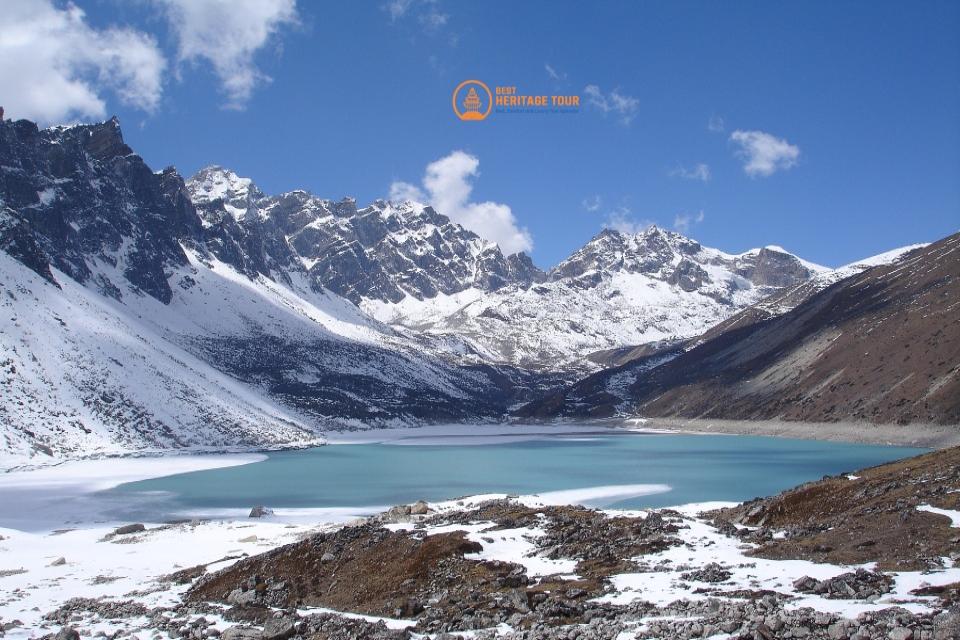
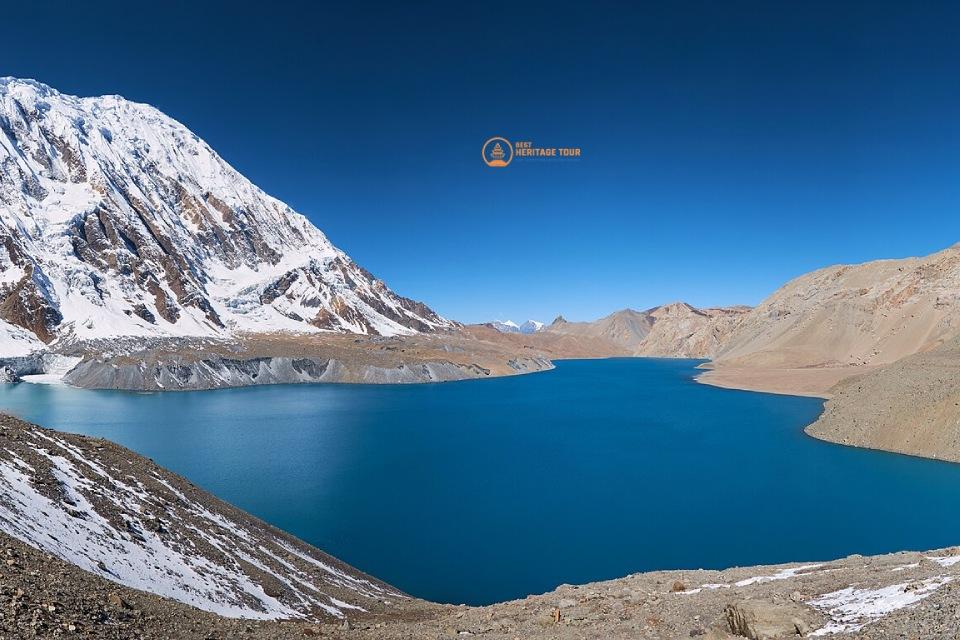
Birendra Lake is one of the most beautiful natural attractions near Samagaon. Located at approximately 3,691 meters, this glacial lake is surrounded by rugged mountain terrain and offers a peaceful setting for photography and sightseeing.
Its turquoise-colored water, particularly during favorable weather, creates a striking contrast against the surrounding rocky slopes and snow-covered mountains.
Pungyen Gompa
Pungyen Gompa is a traditional Buddhist monastery located above Samagaon. It is an important cultural and spiritual attraction in the region, offering beautiful views of Mount Manaslu and the surrounding mountains.
The monastery provides insight into the Buddhist traditions and religious heritage of local Himalayan communities.
Manaslu Glacier
The Manaslu Glacier is another major attraction surrounding the base camp area. Its enormous ice formations, rocky moraine, and rugged terrain demonstrate the impressive natural environment of the high Himalayas.
Mount Manaslu Views
The mountain itself remains the main attraction. As trekkers approach the base camp, the surrounding peaks and enormous southern face of Manaslu create an extraordinary Himalayan landscape.
These attractions make the Manaslu Base Camp hike a rewarding addition to the wider Manaslu Circuit experience.
What Is the Best Time to Visit Manaslu Base Camp?
Choosing the right season is important for enjoying Manaslu Base Camp safely and comfortably. The region experiences significant seasonal weather changes, and visibility, temperature, snowfall, and trail conditions can influence the overall trekking experience.
The two most recommended seasons are spring and autumn.
Spring (March to May)
Spring is an excellent season for the Manaslu Base Camp hike. During this period, temperatures gradually become warmer, the weather generally improves, and the surrounding landscapes become more colorful.
The lower sections of the Manaslu Circuit feature blooming rhododendrons and other Himalayan vegetation. Higher elevations offer impressive views of snow-covered mountains under favorable weather conditions.
April and May are particularly popular months for trekking in the Manaslu region.
Autumn (September to November)
Autumn is another ideal season for visiting Manaslu Base Camp. Following the monsoon, the atmosphere generally becomes clearer, providing excellent mountain visibility and comfortable trekking conditions.
September, October, and November are popular months for the Manaslu Circuit Trek. October is particularly attractive because of its relatively stable weather and beautiful mountain scenery.
Summer and Winter
Summer coincides with the monsoon season in Nepal. Heavy rainfall, slippery trails, landslides, and cloudy mountain views can make trekking more difficult.
Winter brings freezing temperatures and possible snowfall at higher elevations. The Manaslu Base Camp route can become challenging or inaccessible depending on snow and weather conditions.
For a more comfortable experience, Best Heritage Tour generally recommends planning this excursion during spring or autumn.
How Difficult Is the Manaslu Base Camp Hike?
The Manaslu Base Camp hike is considered challenging because of its high elevation, steep uphill sections, uneven terrain, and potentially changing weather conditions.
Although the excursion is not a technical climbing expedition, it requires good physical fitness, stamina, and preparation. The trail gradually gains altitude from Samagaon, and the thinner air can make walking more demanding.
Some important factors affecting the difficulty include:
-
High altitude: The base camp approach reaches approximately 4,500-4,800 meters.
-
Steep ascents: Certain sections involve continuous uphill walking over rocky terrain.
-
Weather conditions: Temperatures can change quickly, particularly near the glacier.
-
Physical endurance: Trekkers need sufficient stamina for several hours of walking.
-
Altitude-related challenges: Headaches, fatigue, and breathlessness may occur at higher elevations.
Previous trekking experience is beneficial but not always essential. However, travelers should be comfortable walking for several hours and should follow a suitable acclimatization schedule.
What Permits Are Required for Manaslu Base Camp?
Since Manaslu Base Camp lies within the restricted Manaslu trekking region, travelers must obtain the necessary permits before beginning their journey.
The main permits associated with the Manaslu Circuit Trek include:
-
Manaslu Restricted Area Permit (RAP): Required for entering the designated restricted area.
-
Manaslu Conservation Area Permit (MCAP): Required for trekking within the Manaslu Conservation Area.
-
Annapurna Conservation Area Permit (ACAP): Required when continuing the traditional circuit toward Dharapani through the Annapurna Conservation Area.
The restricted-area permit fee varies according to the trekking season and the number of days spent in the restricted zone. Additional local requirements may also apply.
Trekkers must arrange the restricted-area permit through a registered trekking agency and be accompanied by a licensed guide. At Best Heritage Tour, we assist travelers with the necessary permit arrangements and related trekking documentation before departure. As regulations and fees can change, the latest requirements should always be confirmed before booking.
Is Manaslu Base Camp Worth Visiting?
Absolutely! Manaslu Base Camp is worth visiting for travelers who want to experience the Himalayan environment beyond the regular Manaslu Circuit trail.
The excursion offers a closer look at Mount Manaslu, beautiful glacial landscapes, and the peaceful surroundings of the upper Budhi Gandaki valley. It also provides an opportunity to explore Birendra Lake and appreciate the region's natural and cultural attractions.
For photographers, mountain enthusiasts, and adventure travelers, the journey creates opportunities to capture some remarkable Himalayan scenery.
However, the excursion requires additional time and physical effort. Travelers should consider their fitness, acclimatization schedule, and weather conditions before including it in their itinerary.
For those with sufficient time in the region, adding Manaslu Base Camp to the Manaslu Circuit Trek can make the overall journey even more rewarding.
Conclusion
Manaslu Base Camp is a remarkable Himalayan destination that combines mountain scenery, natural beauty, cultural exploration, and high-altitude adventure. From the spectacular views of Mount Manaslu and the beautiful Birendra Lake to the traditional atmosphere of Samagaon, every part of this excursion offers something special.
Whether you are an experienced trekker or an adventure enthusiast looking to explore a less-commercialized trekking destination in Nepal, adding Manaslu Base Camp to the Manaslu Circuit Trek can make your Himalayan journey more memorable.
At Best Heritage Tour, we help travelers plan their Manaslu adventures with carefully organized itineraries, experienced local guides, necessary permits, and reliable trekking arrangements. Our team can help you include the Manaslu Base Camp excursion in your trekking itinerary according to your available time, fitness level, and travel preferences.
If you are planning to explore Manaslu Base Camp, contact Best Heritage Tour to discuss your trip, receive detailed information, and start preparing for your Himalayan adventure.
Contact Best Heritage Tour
Phone / WhatsApp / Viber: +977-9851149197 / +977-9810043046
Email: [email protected] / [email protected]
Website: www.bestheritagetour.com
Office: Thamel Marg, Kathmandu, Nepal
Frequently Asked Questions
How high is Manaslu Base Camp?
Manaslu Base Camp is located at approximately 4,500-4,800 meters above sea level, depending on the exact campsite and approach route.
How do you reach Manaslu Base Camp?
Manaslu Base Camp is reached by trekking to Samagaon along the Manaslu Circuit Trek and taking an additional uphill hike toward Birendra Lake and the Manaslu Glacier.
How long does it take to hike from Samagaon to Manaslu Base Camp?
The excursion generally takes around 6-8 hours for a round trip, depending on walking speed, weather, trail conditions, and the chosen stopping point.
What is the best time to visit Manaslu Base Camp?
Spring (March to May) and autumn (September to November) are the best seasons. These months generally offer clearer mountain views and more favorable trekking conditions.
Do you need a special permit to visit Manaslu Base Camp?
There is no separate base camp permit. However, trekkers must obtain the required Manaslu Restricted Area Permit and Manaslu Conservation Area Permit through a registered trekking agency. Additional permits are required when continuing toward the Annapurna region.