All About the Thukla Pass
Every journey to Everest Base Camp carries a blend of awe, challenge, and profound discovery. Trekkers cross dramatic suspension bridges over the Dudh Koshi River, traverse ancient pine forests, and trek into high-alpine environments flanked by snow-capped Himalayan peaks.
Yet, among all the geographic landmarks along the Khumbu Valley, one specific location captures the soul of Himalayan mountaineering: Thukla Pass (also known as Dughla Pass).
Perched at an elevation of 4,830 meters (15,846 feet) above sea level, Thukla Pass is home to the Everest Memorial (sometimes called the Khumbu Cemetery). It stands as one of the most solemn, emotionally powerful, and visually spectacular landmarks on the entire Everest Base Camp route.
We at Best Heritage Tour have guided travelers through the Khumbu region for years. We know that crossing Thukla Pass is not just a physical milestone on the trail - it is a deeply transformative experience.
Below is an extensive guide covering everything you need to know about Thukla Pass, where it is located, what makes it special, and why it remains a must-visit destination for trekkers worldwide.
Where is Thukla Pass? Geographic Location and Elevation
To understand the role of Thukla Pass in high-altitude Himalayan trekking, we must first map its location within the Khumbu region of Nepal.
Key Coordinates and Position
-
Country: Nepal
-
Region: Solukhumbu District, Sagarmatha National Park
-
Trail Positioning: Situated directly between the seasonal settlements of Dughla (4,620m) and Lobuche (4,940m).
-
Altitude: 4,830 meters / 15,846 feet above sea level.
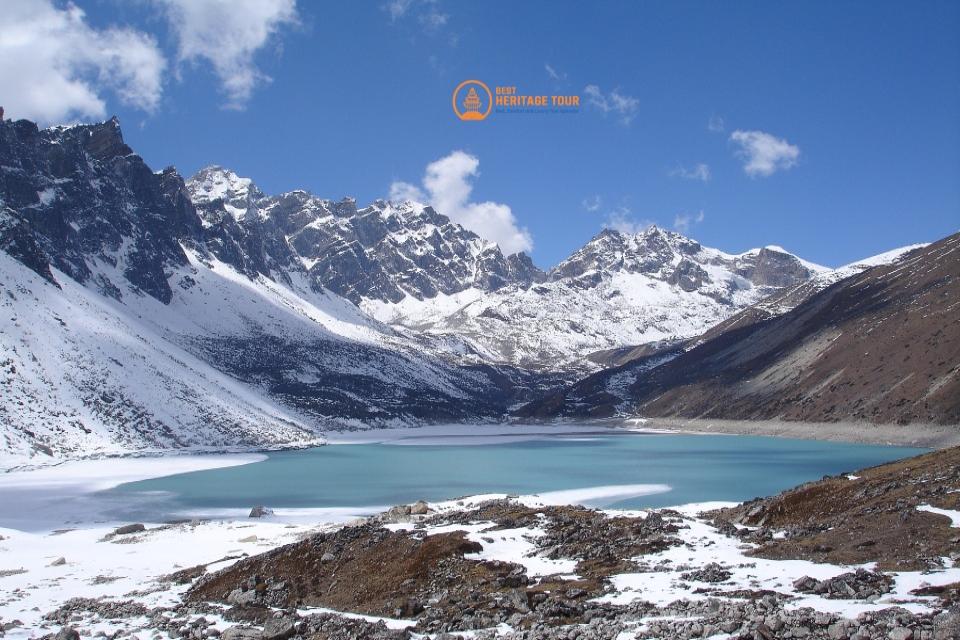
As trekkers ascend past the high-altitude tree line beyond Dingboche or Pheriche, the lush greenery fades into a glacial valley dominated by grey moraine, scree, and windswept alpine scrub. The trail drops slightly into a river bed at the base of the terminal moraine of the Khumbu Glacier. Here lies the tiny, seasonal outpost of Thukla (Dughla) Village.
Directly above this village rises the Thukla Hill - a steep, boulder-strewn incline that rises roughly 210 vertical meters over a short distance. Reaching the top brings you to the plateau of Thukla Pass, the doorway to the upper Khumbu Glacier and Lobuche.
What Makes Thukla Pass Special?
While many mountain passes across Nepal are celebrated strictly for their panoramas, Thukla Pass holds a dual identity: it is both a breathtaking scenic viewpoint and a sacred outdoor sanctuary.
1. The Everest Memorial (Khumbu Cemetery)
The defining feature of Thukla Pass is the collection of stone chortens, monuments, and plaques honoring climbers, Sherpa guides, and adventurers who lost their lives while attempting Mount Everest (8,848.86m), Lhotse (8,516m), Nuptse (7,861m), and nearby Himalayan peaks.
Unlike traditional cemeteries, the Everest Memorial at Thukla Pass contains very few actual graves; instead, it serves as a symbolic home for the souls of those lost on the upper mountain. Dozens of stone structures are scattered across the exposed rocky plateau.
Each monument tells a story of passion, ambition, and the harsh realities of extreme mountaineering. Colorful Buddhist prayer flags (Lungta) wrap tightly around the stone structures, snapping loudly in the crisp mountain wind to carry prayers for peace into the sky.
2. Notable Tributes and Historical Monuments
Walking through the memorials, trekkers encounter names etched into metal, brass, stone, and wooden plaques. Among the most recognized tributes are:
-
Scott Fischer Memorial: Scott Fischer was an legendary American mountaineer and founder of Mountain Madness, who tragically perished during the infamous 1996 Everest Disaster made famous by Jon Krakauer’s book Into Thin Air. Built by Sherpas shortly after his death, his stone chorten sits prominently on the pass.
-
Rob Hall Memorial: Rob Hall was the respected Kiwi expedition leader of Adventure Consultants who also died on Everest during the May 1996 storm. His memorial stands as a testament to leadership, friendship, and deep respect for the mountains.
-
Babu Chiri Sherpa Memorial: Celebrating one of the greatest Sherpa mountaineers in history, who summited Everest 10 times and spent 21 hours on the summit without supplemental oxygen before passing away in a crevasse fall on Everest in 2001.
-
Tributes to Local Sherpa Climbers: Dozens of unheralded Sherpa heroes who risked and gave their lives supporting international teams have their names carved here, honoring their skill, bravery, and selflessness.
3. A Tactical Acclimatization and Physical Test
Beyond its emotional gravity, Thukla Pass is a major physical hurdle on the trek to Everest Base Camp.
The climb up from Dughla village to the pass is often referred to by trekkers as the "Thukla Hill Climb." At an altitude approaching 4,800 meters, atmospheric pressure drops significantly, providing roughly 55% of the oxygen available at sea level.
Ascending this steep, rocky trail requires slow, steady steps (bistarai, bistarai in Nepali) and controlled breathing. Reaching the top gives trekkers a distinct boost in confidence, proving their body's ability to adapt to the thin air before pushing past 5,000 meters toward Lobuche and Gorak Shep.
4. Panoramic Himalayan Landscape
While the mood atop the pass is quiet and reflective, the surrounding natural beauty is magnificent. Standing at Thukla Pass, trekkers are surrounded by high-altitude geological formations and classic Himalayan scenery:
|
Landmark / Feature |
Visual Highlights & Significance |
|---|---|
|
Ama Dablam (6,812 m) |
View of its sharp ridge line looking south down the valley. |
|
Pumori (7,161 m) |
The elegant pyramid of snow dominating the northern horizon. |
|
Nuptse & Lhotse Wall |
Towering granite and ice faces framing the upper Khumbu. |
|
Cholatse & Taboche |
Dramatic, sheer rock pillars towering over the western skyline. |
|
Khumbu Glacier Moraine |
Massive glacial debris fields carving out the valley floor below. |
Why Thukla Pass is a Must-Visit on Your Nepal Journey
When planning a trip to the Himalayas, travelers often focus on reaching Everest Base Camp or standing atop Kala Patthar. However, almost all returned trekkers cite Thukla Pass as one of the most memorable and meaningful moments of their trip.
1. It Offers a Humbling Perspective on Adventure
High-altitude trekking can sometimes feel like a personal checklist of accomplishments. Thukla Pass resets that perspective.
Standing among the memorials reminds every traveler of the sheer force of nature and the vulnerability of human beings in the high mountains. It encourages mindful trekking - reminding us to respect weather conditions, listen to our bodies, follow safety protocols, and never underestimate the Himalayas.
2. A Deep Connection to Sherpa Culture and Mountaineering History
Mountaineering in Nepal is inseparable from the Sherpa people. The monuments at Thukla Pass reflect the spiritual bond that the indigenous Sherpas share with the mountains they consider sacred (beyul).
Observing how local guides and porters pause at the pass to whisper prayers, burn incense, or adjust prayer flags gives travelers authentic insight into high-altitude Sherpa culture and mountaineering history.
3. A Moment of Rest and Quiet Reflection
After pushing through the challenging uphill climb from Dughla village, the flat plateau of Thukla Pass provides a natural place to stop, rest your legs, hydrate, and regain your breath.
Sitting on a stone bench surrounded by prayer flags, watching clouds drift past towering peaks, offers a rare moment of stillness and personal reflection that stays with travelers long after they return home.
Trekking to Thukla Pass: Practical Trail Info & Route Guide
To help you prepare for your journey across Thukla Pass, here is essential logistical information for planning your itinerary.
Standard Itinerary Integration
Thukla Pass is reached on Day 7 or Day 8 of a standard 12-to-14-day Everest Base Camp Trek.
-
Morning Start: Most groups leave Dingboche or Pheriche after breakfast, trekking through the wide alpine valley past the yak pastures of Dhyangbo.
-
Lunch Stop at Dughla (4,620m): After about 2 to 3 hours of gradual trekking, you cross the wooden bridge over the glacial stream fed by the Khumbu Glacier and reach Dughla village. Trekkers usually stop here for a warm cup of lemon ginger tea or an early lunch.
-
The Climb: Directly behind the tea houses, the trail climbs up the steep moraine ridge. This section takes approximately 45 minutes to 1.5 hours depending on your pace and acclimatization level.
-
Crossing the Pass: After spending 20 to 30 minutes exploring the memorial, taking photos, and reflecting, the trail levels out onto a gentle gravel path leading toward Lobuche (approx. 1 to 1.5 hours away).
Key Trekking Facts & Summary Table
|
Metric / Parameter |
Details |
|---|---|
|
Exact Elevation |
4,830 m / 15,846 ft |
|
Difficulty Level |
Moderate to Challenging (due to steep slope and high altitude) |
|
Trail Condition |
Rocky, steep scree paths, loose stones, exposed alpine terrain |
|
Best Time of Day to Cross |
Morning (8:00 AM - 11:30 AM) to avoid afternoon winds and clouds |
|
Permits Required |
Sagarmatha National Park Permit & Pasang Lhamu Rural Municipality Permit |
|
Closest Settlements |
Dughla (below, south) and Lobuche (above, north) |
Essential Tips for Crossing Thukla Pass Safely
Safety is our top priority when trekking in the Everest region. Crossing a 4,830-meter pass requires proper preparation, execution, and respect for mountain weather.
1. Acclimatize Properly Before Attempting the Climb
Altitude sickness (AMS - Acute Mountain Sickness) is a real risk in the Khumbu valley. Ensure your itinerary includes at least two dedicated acclimatization days before arriving at Thukla - one at Namche Bazaar (3,440m) and one at Dingboche (4,410m). Proper acclimatization ensures your body produces enough red blood cells to tackle the steep climb to 4,830 meters comfortably.
2. Maintain a "Pole-Pole" (Slow and Steady) Pace
The incline out of Dughla village can look intimidating from below. The secret to conquering it without exhaustion is pacing:
-
Keep your stride short and your pace slow and rhythmic.
-
Match your breathing to your steps.
-
Use trekking poles to reduce impact on your knees and assist your upper body during the steep push.
3. Layer Your Clothing Correctly
Weather at Thukla Pass changes rapidly. While you may sweat during the steep ascent, the winds at the summit can drop temperatures quickly.
-
Wear a moisture-wicking base layer.
-
Have a windproof and waterproof outer jacket ready in your daypack to put on as soon as you reach the pass.
-
Keep a warm beanie and gloves easily accessible.
4. Practice Leave No Trace & Respect Cultural Monuments
The Everest Memorial is a place of remembrance.
-
Do not climb or sit on the stone chortens or memorial plaques.
-
Do not disturb prayer flags or remove items left by family members.
-
Carry out all trash, including snack wrappers and plastic bottles.
-
Keep noise levels respectful while walking through the memorial grounds.
Conclusion
Crossing Thukla Pass is far more than a physical milestone on the trek to Everest Base Camp - it is a deeply emotional, humbling, and unforgettable journey into the heart of high-altitude mountaineering history. Standing among the sacred chortens and quiet stone tributes of the Everest Memorial, surrounded by the world’s highest peaks, offers every traveler a profound connection to the spirits, stories, and sacred mountains of the Khumbu region.
At Best Heritage Tour, we are dedicated to ensuring your Himalayan journey is handled with the highest standards of safety, cultural respect, and expert local guidance. Whether you are aiming to reach Everest Base Camp, cross high mountain passes, or experience the rich heritage of Nepal, our team is here to guide your steps every step of the way.
Ready to Plan Your Himalayan Adventure? Contact Best Heritage Tour Today!
Reach out to our team of Nepal travel specialists to customize your trek, inquire about upcoming departure dates, or get expert advice for your journey:
Phone / WhatsApp / Viber: +977-9851149197 / +977-9810043046
Email: [email protected] / [email protected]
Website: www.bestheritagetour.com
Office: Thamel Marg, Kathmandu, Nepal