UNESCO Tour: Pashupatinath, Boudhanath, Swayambhunath and Patan - 1 Day
Start
1
Country
Nepal
Difficulty
Easy
Destination
Kathmandu & Lalitpur
Activity
Cultural Tour & Sightseeing
Accommodation
N/A
Meals
Lunch
Transportation
Private Vehicle
Max Altitude
1324m
Group Size
2-19
Trip Starts
Kathmandu
Trip Ends
Kathmandu
Best Season
All Seasons
Overview
Key Highlights of the UNESCO World Heritage Tour
- Explore the Pashupatinath Temple, one of the holiest Hindu temples in Nepal.
- Witness the early morning rituals and ceremonies along the Bagmati River at Pashupatinath.
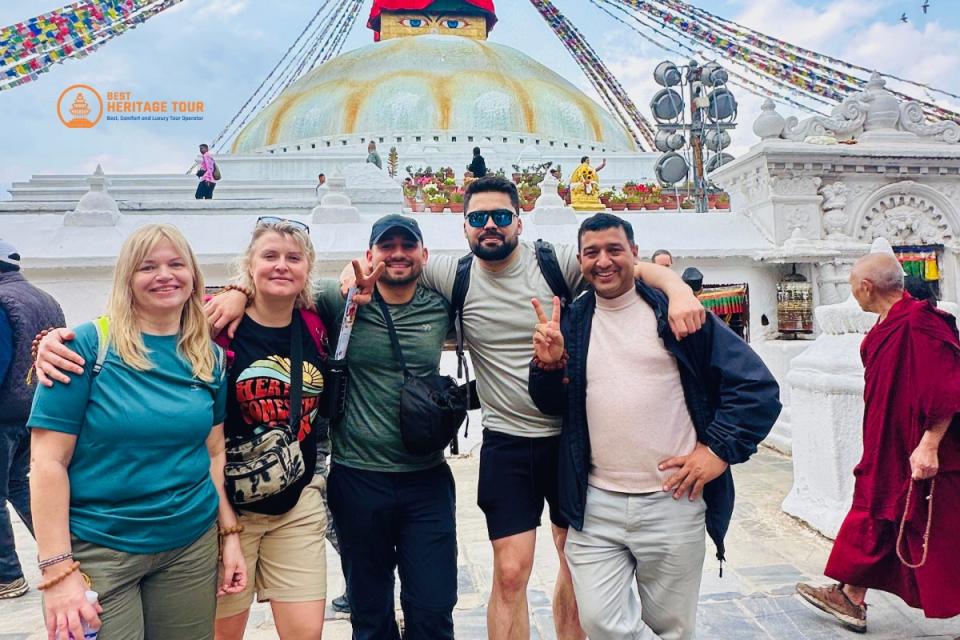
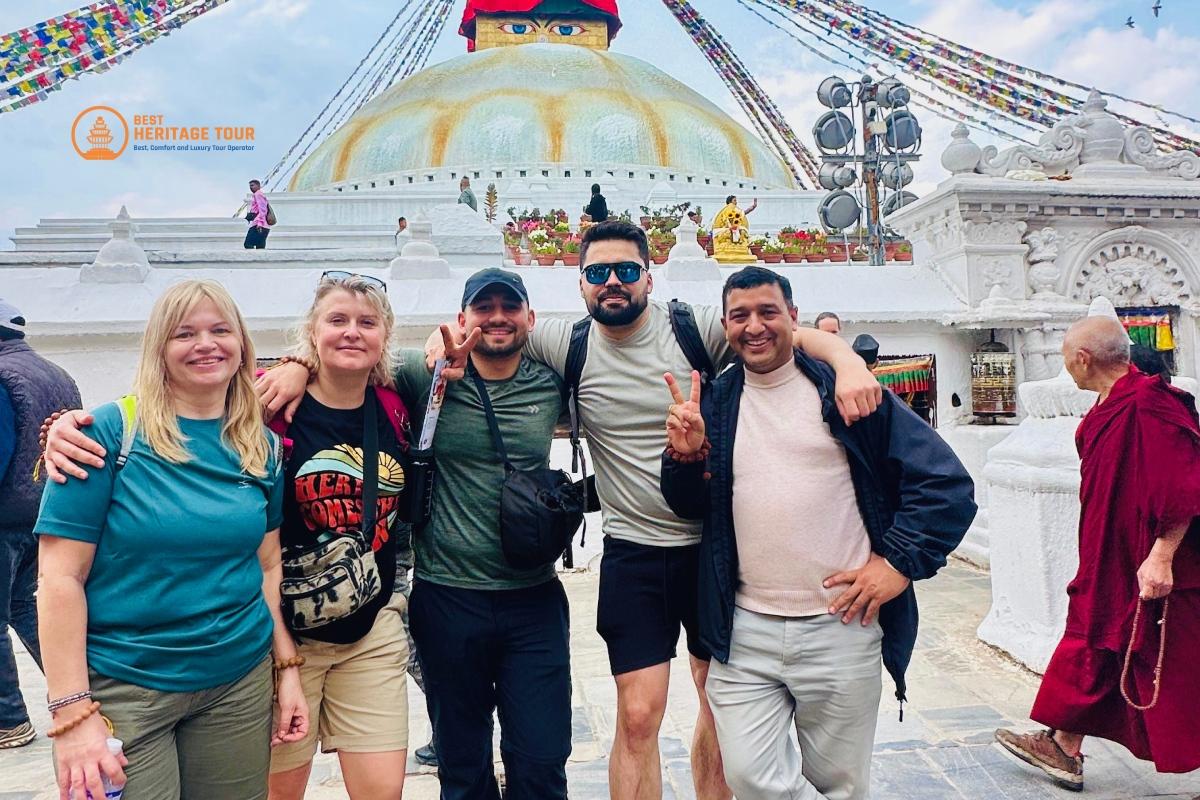
- Visit the Boudhanath Stupa, one of the largest and most important stupas in the world.
- Walk around the Kora (circular path) of Boudhanath Stupa while spinning prayer wheels.
- Experience Tibetan Buddhism at the nearby monasteries surrounding Boudhanath.
- Enjoy a delicious lunch break with a mix of Nepali and Tibetan food, including Dal Bhat, Momo, and Thukpa.
- Visit Swayambhunath Stupa (Monkey Temple) for breathtaking panoramic views of Kathmandu Valley.
- Explore the ancient shrines and smaller temples within the Swayambhunath complex.
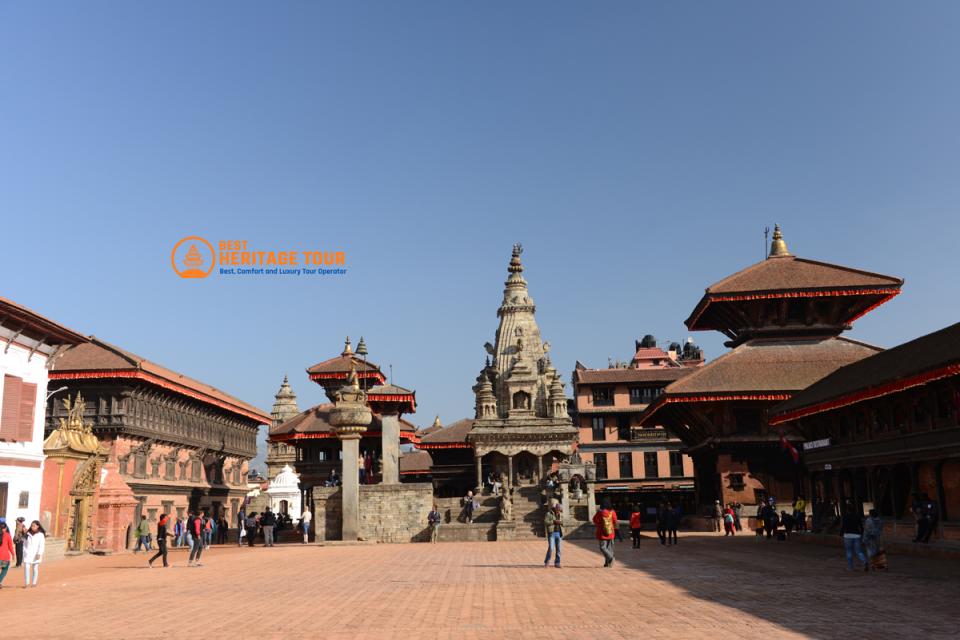
- Admire the intricate Newar architecture and historical sites at Patan Durbar Square.
- Visit the Patan Museum and nearby Golden Temple to delve deeper into Kathmandu’s cultural and artistic heritage.
Why Choose Best Heritage Tour for Your UNESCO World Heritage Tour?
- Free airport pick-up and drop-off service
- Online pre-trip briefing and booking confirmation for better preparation
- Multiple communication channels (Phone, Email, WhatsApp, Viber) for easy support
- 24/7 customer support available at +977-9851149197 / +977-9810043046
- Simple and secure payment options including Cash, Card & Bank Transfer
- Free luggage storage facility at Best Heritage Tour store during the tour
- We plant a tree in the name of travelers (upon request), as a part of our commitment to sustainable tourism
UNESCO World Heritage Tour in Kathmandu Route Overview
Embark on a captivating journey through Kathmandu’s spiritual heart with our 1-day guided tour of Pashupatinath, Boudhanath Stupa, Swayambhunath Stupa, and Patan Durbar Square. This 10 Hours Kathmandu Cultural Tour combines breathtaking architecture, cultural exploration, and deep spiritual significance, offering travelers a comprehensive glimpse into Nepal’s rich heritage.
Your tour begins at the revered Pashupatinath Temple, one of the holiest Hindu shrines in Nepal. Nestled along the banks of the sacred Bagmati River, the temple complex offers visitors the chance to witness ancient rituals and immerse themselves in the spiritual energy of this UNESCO World Heritage Site. With its impressive pagoda-style architecture and sacred cremation ghats, Pashupatinath is a profound starting point for the journey.
Next, explore the magnificent Boudhanath Stupa, one of the largest and most important Tibetan Buddhist sites in the world. The stupa’s colossal mandala-like structure, adorned with the all-seeing eyes of Buddha, is a symbol of enlightenment and peace. As you walk around the stupa, spinning prayer wheels and absorbing the tranquil atmosphere, you’ll also discover the vibrant Tibetan culture that surrounds the area.
The adventure continues with a visit to Swayambhunath Stupa, famously known as the Monkey Temple. Perched atop a hill with panoramic views of Kathmandu, this ancient stupa is a blend of Buddhist and Hindu symbolism, offering visitors a unique experience. The site is home to many shrines and statues, and the playful monkeys add a lively touch to the spiritual environment.
Finally, explore Patan Durbar Square, a historic gem in the heart of Lalitpur. This UNESCO World Heritage Site showcases the architectural brilliance of the Newar culture, with intricately carved temples, statues, and palaces dating back to the Malla dynasty. As you wander through the square, visit the impressive Hiranya Varna Mahavihar and the Mahabouddha Temple, which reflect the region’s rich history and artistic heritage.
At Best Heritage Tour, we believe every journey should be a meaningful adventure. Our Kathmandu Cultural Heritage tour offers more than just sightseeing-it’s a chance to connect with the spiritual essence of Nepal, marvel at its architectural wonders, and experience its diverse cultural heritage. Whether you seek divine blessings at Pashupatinath, spiritual tranquility at Boudhanath, or a glimpse into Nepal’s royal history at Patan Durbar Square, this tour offers something for every traveler.
What can you expect from Kathmandu Cultural Heritage Tour?
1. Spiritual Awakening
As you visit the revered Pashupatinath Temple and Boudhanath Stupa, you will experience the powerful spiritual energy of Nepal. Witness ancient Hindu rituals, including cremation ceremonies along the banks of the Bagmati River, and immerse yourself in the peaceful atmosphere of the Tibetan Buddhist practices at Boudhanath. These sacred sites provide a profound sense of connection to the divine.
2. Breathtaking Views
At Swayambhunath Temple, also known as the Monkey Temple, you’ll enjoy stunning panoramic views of the Kathmandu Valley. While exploring the hilltop temple, you’ll pass by Buddhist shrines and statues, with the vibrant monkeys adding a unique touch to the experience. The sight of Buddha’s all-seeing eyes on the stupa symbolizes wisdom and insight, offering a sense of clarity and peace.
3. Architectural Marvels
Patan Durbar Square is a treasure trove of historical and architectural wonders. Explore stunning Newar architecture, where intricate wood carvings, stone statues, and beautifully preserved temples and palaces tell the story of Nepal’s royal past. The square’s rich artistry will leave you awe-struck, with each structure showcasing the craftsmanship of the Malla kings and the cultural history of the Kathmandu Valley.
4. Cultural Immersion
As you explore these sacred sites, you’ll have the opportunity to interact with local artisans, monks, and worshippers. Whether you’re watching prayer rituals at Boudhanath, engaging with craft vendors in Patan, or observing the spiritual practices at Pashupatinath, the tour offers a unique chance to experience the daily life, traditions, and customs of the Nepalese people.
5. Historical Significance
This tour offers a deeper understanding of Nepal’s history, from the ancient roots of Swayambhunath, believed to be over 2,000 years old, to the royal heritage embedded in Patan Durbar Square. You’ll learn about the historical importance of each site and how they have shaped Nepal’s culture and identity over centuries.
6. Sacred Rituals
Witness the sacred rituals that bring these temples and stupas to life. At Pashupatinath, experience the morning aarti ceremony, where offerings are made to Lord Shiva, and at Boudhanath, observe the meditative prayers and offerings by Tibetan Buddhists. These rituals provide a powerful connection to the spiritual practices that have been passed down for generations.
7. Unforgettable Memories
This tour is a perfect blend of spiritual discovery, historical exploration, and cultural immersion. You’ll leave with a deeper appreciation for Nepal’s rich heritage, having experienced some of its most iconic landmarks. The beauty, tranquility, and history of each site will stay with you long after the journey ends, making this an unforgettable adventure through Kathmandu’s spiritual and cultural heart.
Are you ready for Kathmandu Cultural Heritage Tour?
For this tour, what you truly need in you is an open mind, curiosity, and a deep respect for both spirituality and culture. It’s essential to approach each sacred site with an open heart, embracing the diverse spiritual practices you’ll encounter- from the Hindu rituals at Pashupatinath to the Tibetan Buddhist ceremonies at Boudhanath. A desire to learn and a curiosity for Nepal’s rich history and architecture will enhance your experience, as sites like Patan Durbar Square and Swayambhunath offer fascinating stories to uncover. It’s also important to have respect for the local customs, understanding the sacred significance of each temple and the rituals practiced by locals.
As you witness moments of prayer or quietly reflect in peaceful spaces, having patience and a willingness to engage in introspection will deepen your connection to these sites. Lastly, a sense of adventure will allow you to fully embrace the journey-discovering new places, meeting new people, and immersing yourself in a culture steeped in centuries of tradition. With these qualities, you’ll be fully ready to experience all the spiritual, cultural, and historical richness this tour offers.
Itinerary
1Day 1: Pashupatinath, Boudhanath, Swayambhunath, and Patan Durbar Square Tour
Morning Pickup (Around 9: 00 A.M.) from Hotel & Travel to Pashupatinath Temple
After having breakfast at your hotel, the tour begins around 9:00 A.M. with pick-up from your hotel in Thamel, Kathmandu. From there, you'll head to Pashupatinath Temple, one of the most sacred and revered Hindu temples in Nepal. The temple, situated on the banks of the Bagmati River, is a UNESCO World Heritage site and holds immense religious significance. You'll have enough time to explore the temple complex, which includes the main shrine dedicated to Lord Shiva, as well as the nearby cremation Ghats. You can witness the early morning rituals and observe local worshippers, which offers a truly spiritual experience. The tranquil atmosphere will give you a deeper connection to the essence of Hindu rituals.
Travel to Boudhanath Stupa
Following your visit to Pashupatinath, the next stop is Boudhanath Stupa, a short drive away. This massive stupa is one of the largest in the world and a key site for Tibetan Buddhism. Here, you’ll spend some time walking around the stupa, known as the Kora, while spinning prayer wheels. The peaceful ambiance, combined with the colorful prayer flags fluttering in the breeze, creates a serene atmosphere. The stupa is surrounded by Tibetan monasteries, offering you a chance to explore and appreciate the unique Tibetan culture. The vibrant local shops also provide an opportunity to purchase handmade crafts and Tibetan items.
Lunch Break
After your spiritual visits in the morning, you'll enjoy a well-deserved lunch break at a local restaurant, located conveniently near Boudhanath. Lunch in Boudhanath is a wonderful opportunity to enjoy both Nepali and Tibetan cuisine. You can try Dal Bhat (lentil soup with rice), a traditional Nepali dish, or enjoy Momo (Tibetan dumplings) filled with vegetables or meat. Thukpa, a noodle soup popular in both Nepali and Tibetan cuisines, is another delicious choice. The meal is a great way to experience the fusion of Nepali and Tibetan flavors while relaxing and refueling for the rest of your day.
Travel to Swayambhunath Stupa (Monkey Temple)
After-lunch, your next destination is Swayambhunath, also known as the Monkey Temple. Perched on a hilltop, this stupa offers breathtaking panoramic views of the Kathmandu Valley. Here, you'll be exploring the stupa and surrounding shrines. The area is known for its resident monkeys, adding a playful touch to the otherwise peaceful surroundings. As you wander around the temple complex, take in the awe-inspiring view of Kathmandu city below. The combination of spiritual tranquility and a lively atmosphere makes Swayambhunath a must-visit.
Travel to Patan Durbar Square
After your time in Swayambhunath, your final stop will be Patan Durbar Square, a UNESCO World Heritage site renowned for its stunning Newar architecture and historical significance. You’ll have 2-3 hours to explore the square, where you can visit the Patan Museum to learn more about the city's rich cultural history. The square is home to intricate temples, shrines, and carvings, which reflect the artistic brilliance of the Newar people. The nearby Golden Temple (Hiranya Varna Mahavihar) is also worth a visit for its serene ambiance and beautiful architecture. You’ll also have time to wander through the local markets, where you can find a variety of Nepali handicrafts to take home as souvenirs.
Return to Hotel
After a day of sightseeing, you will be driven back to your hotel, concluding your journey through some of Kathmandu’s most iconic and culturally significant sites.
Cost Includes / Excludes
Included
- TRANSPORTATION : Air Conditioner private car with professional driver during your full tour.
- GUIDE : One experienced English speaking, government licensed city tour guide.
- STAFF EXPENSES : All expenses of guide & driver including salary, meals, parking charge, etc.
Excluded
- EXTRA EXPENSES : Monuments Entrance fee and Personal expenses (like meals, drinks, tips, etc).
- TAXES & SERVICE CHARGE : All government taxes 13% and service charge 10%.
Trip Info
Useful Information About the UNESCO World Heritage Tour in Kathmandu
To ensure a comfortable, respectful, and memorable UNESCO World Heritage Tour in Kathmandu, travelers are advised to understand the key trip details before starting the sightseeing journey. Knowing the heritage-site opening times, entrance fees, walking requirements, cultural etiquette, photography rules, seasonal conditions, transportation arrangements, and guide services in advance helps travelers prepare appropriately and enjoy a smooth and well-organized exploration of Kathmandu’s historic temples, stupas, courtyards, and living cultural traditions.
What Are the UNESCO World Heritage Sites Visited on This Tour?
The UNESCO World Heritage Tour in Kathmandu takes you through four remarkable monument zones of the Kathmandu Valley World Heritage property: Pashupatinath, Boudhanath, Swayambhunath, and Patan Durbar Square. Together, these sites reveal the extraordinary religious diversity, artistic traditions, architecture, history, and living cultural heritage of the Kathmandu Valley.
During this tour, Best Heritage Tour takes you to four of these seven zones, allowing you to experience both major religious traditions and the architectural heritage of historic Kathmandu and Patan. Each destination has its own character: Pashupatinath represents one of Nepal's most important Hindu pilgrimage traditions, Boudhanath is a major center of Himalayan Buddhism, Swayambhunath combines Buddhist and Hindu traditions on a historic hilltop, and Patan Durbar Square showcases the exceptional artistic achievement of the Newar Malla period.
1. Pashupatinath Temple - Sacred Hindu Heritage of Nepal
History of Pashupatinath Temple
Pashupatinath is one of the most sacred Hindu pilgrimage sites in Nepal and one of the principal monument zones of the UNESCO-listed Kathmandu Valley. The extensive Pashupati monument zone includes the main temple complex, numerous shrines, monuments, ghats, and sacred areas along the Bagmati River.
The temple has a long history associated with the worship of Lord Shiva in the form of Pashupati, meaning the Lord of Animals. The present complex reflects centuries of religious development, rebuilding, patronage, and architectural change. UNESCO records the temple as dating to the Licchavi period, with important renovations taking place in later centuries.
Can Non-Hindus Enter Pashupatinath Temple?
No. Non-Hindus are not permitted to enter the main Pashupatinath Temple. Visitors who cannot enter can still experience the wider monument zone, view the main temple from permitted viewpoints, explore the surrounding shrines and architecture, and observe the Bagmati River and ghats respectfully.
This restriction is part of the religious practice of the temple and should be respected by all visitors.
List of All Major Sites in the Pashupatinath Temple Area
|
I. Major Temples & Shrines
IV. Sacred River Sites & Ghats
|
II. Courtyards, Complex Sites & Parks
III. Statues, Idols & Monuments
|
I. Major Temples & Shrines
-
Main Pashupatinath Temple: The central two-story pagoda-style temple housing a four-faced Lingam of Lord Mahadev, featuring roofs plated with gold and struts adorned with woodcrafts relating to Lord Shiva.
-
Vasuki Naagaraj Temple: A pagoda-style temple located at the north-eastern corner housing the idol of Vasuki Naagaraj, the king of all serpents whose tail is believed to extend to the Bagmati River.
-
Unmukta Bhairav Temple: A small pagoda-style temple housing an awe-inspiring, ten-weapon-brandishing idol of Bhairav bound by iron chains, worshipped by devotees to cure infertility and ward off bad omens.
-
Santaneshwor Mahadev Temple: A sacred shrine situated within the main square of the temple premises, visited by devotees offering prayers for children.
-
Eleven Rudra Mahadev Temple: A dedicated temple structure located adjacent to the Shivayantra complex.
-
Mrigeshwor Mahadev Temple: A historic stone shrine housing the ancient idol of Mrigeshwor Mahadev, depicting Lord Shiva in the form of a deer and worshipped as the original deity of the Pashupati area.
-
Panchadeval Temple Complex: A large square complex built in 1881 with five domes housing Shiva Lingams, surrounded by bull idols and tridents, currently used as an old age care home.
-
Shikhar-Style Shiva Temple: A distinct stone temple constructed in the traditional Shikhar architectural style, situated in the square near the Rajrajeshwori complex.
-
Rajrajeshwori Temple: A large temple complex built in memory of Queen Rajrajeshwori, renowned for its artistic and intricate erotic figurines displayed on its wooden struts.
-
Kirateshwor Mahadev Temple: A historic temple situated atop a hillock near Gaurighat where Lord Shiva is believed to have resided in the guise of a Kirat hunter.
-
Gorakhnath Temple: A Shikhar-style temple with an adjacent tall trident, marking the sacred spot where Saint Gorakhnath performed penance.
-
Vishworup Temple: A Mughal-style temple built under Prime Minister Jung Bahadur Rana that houses an idol representing the unified form of all Hindu deities.
-
Guhyeshwori Temple: A highly sacred Tantric temple where Goddess Satidevi's body parts are believed to have fallen, featuring a gold and silver-plated interior surrounding a sacred silver kalash.
-
Annapurna Temple: A dedicated shrine located within the central plaza surrounding the main temple complex.
-
Ganesh Temple: A shrine dedicated to Lord Ganesh, situated in the main courtyard area of the temple grounds.
-
Hanuman Temple: A shrine housing an idol of the monkey god Hanuman, located within the temple complex.
-
Budhanilakantha Shrine: A dedicated shrine/idol honoring Lord Budhanilakantha (Vishnu) positioned within the main square.
-
Krishna Temple: A shrine dedicated to Lord Krishna located among the cluster of temples surrounding the central plaza.
-
Ram Temple: A temple structure situated along the scenic walking trail leading through the Mrigasthali forest.
II. Courtyards, Complex Sites & Parks
-
Shivayantra: A unique sacred enclosure comprising 525 interconnected Shiva Lingams arranged around a central three-story umbrella-style temple.
-
Mrigasthali Park (Shleshmantak Forest): A protected forest and deer conservation area extending from the Bagmati River to Gaurighat, famous as the mythical retreat of Shiva and Parvati.
-
Aryaghat: The sacred ghat located on the eastern bank of the Bagmati River, utilized as the holy site for Hindu cremation rites and ritual bathing.
-
Death Rituals Building Complex: A large functional complex located near Gaushala and Rajrajeshwori used by families for observing traditional post-death ceremonies.
III. Statues, Idols & Monuments
-
Four-Faced Shiva Lingam (inside the main sanctum): The central sacred deity housed inside the two-story pagoda, touched only by priests wearing saffron attire.
-
Kirtibhimukh Bhairav Idol: A bodyless head idol located south of the main temple, receiving animal sacrifices every full moon day.
-
Virupaksha Idol (also known as Kali): An ancient stone idol half-buried on the west bank of the Bagmati River, believed to bring about apocalypse if it emerges completely.
-
Giant Sitting Metal Bull Statue (Nandi, located in front of the Western door): An enormous metal statue depicting Lord Shiva's carrier positioned directly outside the main temple entrance.
-
Life-sized Miniature Metal Bull Statue: A smaller metal version of the bull established directly in front of the larger Nandi statue.
-
Huge Trident (erected towards the North of the main temple): A massive metal trident representing Lord Shiva's primary weapon, erected on the northern side of the main temple.
-
Idol of Goddess Parvati at Gaurighat: A riverside idol at Gaurighat where Goddess Parvati took the form of a Kiratini to trick Lord Shiva.
-
Silver Urn (Kalash) (representing Goddess Satidevi in Guhyeshwori): A sacred silver urn housed inside the Guhyeshwori Temple and worshipped as the form of Goddess Satidevi.
-
Trident at Gorakhnath Temple: A long trident erected adjacent to the Shikhar-style Gorakhnath Temple along the Mrigasthali path.
-
Five Bull Statues, Five Tridents, and Five Vessels (inside Panchadeval): Sacred ritual items surrounding the five domed shrines within the Panchadeval complex.
-
Ancient Four-faced Shiva Linga (east of Panchadeval): A historic four-faced stone Shivalinga located towards the eastern section of the Panchadeval complex.
-
Original Shiva Lingam (western bank of Bagmati River): The sacred divine lingam discovered by cowherds, situated on the western bank of the Bagmati River beside the Virupaksha idol.
IV. Sacred River Sites & Ghats
-
Bagmati River Bank: The holy river flowing past the eastern side of the Pashupatinath temple, whose water is used for daily temple rituals.
-
Gaurighat: A sacred riverbank location situated north of the main complex, famous for holding annual Shri Swosthani festivals.
2. Boudhanath Stupa - Center of Himalayan Buddhism
History of Boudhanath Stupa
Boudhanath, also known as Bauddhanath or Boudha, is one of the most recognizable Buddhist landmarks in Kathmandu. UNESCO identifies Bauddhanath as one of the seven monument zones of the Kathmandu Valley World Heritage property and describes it as containing the largest stupa in Nepal.
Historical and religious traditions place the origins of the stupa in the early centuries of the Kathmandu Valley's Buddhist history. The stupa is traditionally associated with an origin around the 5th century, with later renovations shaping the monument into the form seen today.
Boudhanath became particularly important to Tibetan and Himalayan Buddhist communities. Over time, monasteries and traditional residences developed around the great stupa, transforming the surrounding neighborhood into one of the most important centers of Tibetan Buddhist culture in Nepal.
List of All Major Sites in the Boudhanath Area
|
I. Main Stupa Structures |
II. Guardian Idols & Shrines |
|
|
I. Main Stupa Structures
- The Bouddhanath Stupa (Khasuti): The central 43-meter tall main Stupa built on three-stepped plinths.
-
Harmika: The square facades located at the top of the Stupa bearing pairs of eyes on all four sides.
-
13-Step Spire: The spire atop the Harmika representing the 13 stages needed to attain Buddhahood.
-
Gold Pinnacle: The gold-encrusted pinnacle sitting at the topmost point of the Stupa.
II. Guardian Idols & Shrines
-
Idol of Bajrapani: Enshrined riding on an elephant at the steps of the lowest plinth level as a guardian.
-
Idol of Khadgapani: Enshrined riding on an elephant opposite Bajrapani at the plinth steps as a guardian.
-
108 Stone Idols of Various Deities: Stone shrines/idols surrounding the Stupa perimeter (specifically mentioning Tara and Lokeshwor).
3. Swayambhunath Stupa - Monkey Temple
History and Religious Significance of Swayambhunath
Swayambhunath is one of the oldest and most important Buddhist monuments in the Kathmandu Valley. UNESCO identifies the Swayambhu monument zone as containing the oldest Buddhist monument in the Valley. The earliest written reference to the stupa dates to the 5th century, although Buddhist and local traditions associate the site with a much earlier period.
The name Swayambhu is commonly associated with the idea of something that arose or manifested by itself. According to the traditional legend of the Kathmandu Valley, the valley was once a lake, and a self-arisen sacred light appeared at the site of Swayambhunath. Although this story belongs to religious tradition rather than documented archaeological history, it remains an important part of the spiritual identity of the site.
Why Is Swayambhunath Called the Monkey Temple?
Swayambhunath is widely known to international visitors as the Monkey Temple because a large population of monkeys lives around the hill and temple complex. The nickname became especially common among visitors from the 1970s onward.
The monkeys are part of the character of the site, but Swayambhunath's significance extends far beyond its nickname. It remains one of Nepal's most important Buddhist monuments and a living religious complex where visitors can observe centuries-old traditions.
List of All Major Sites in the Swayambhunath Stupa Area
|
I. Main Stupa & Primary Temples
III. Access Points, Stairs & Entry Parks
|
II. Monasteries, Museums & Lakes
IV. Statues, Idols, Relics & Monuments
|
I. Main Stupa & Primary Temples
-
Swayambhunath Stupa (Swoyambhunath Mahachaitya): The central, 50-meter-diameter dome-shaped Mahachaitya built atop the hillock.
-
Anantapur Temple: A tall Shikhara-style temple located on the hilltop dedicated to Lord Buddha.
-
Pratappur Temple: A tall Shikhara-style temple located on the hilltop dedicated to Bhagavati.
-
Harati Mata Temple: A two-story pagoda-style metal temple located west of the main Stupa.
-
Shantipur: A sacred temple site established by Shantikar Acharya (Prachanda Dev).
-
Agnipur Temple: One of the five ancient protective cardinal element temples (representing Fire) established by Shantikar Acharya.
-
Basupur Temple: A small temple housing Basundhara, Kuber, and four Karnaame Buddhas.
-
Saraswati Temple: A shrine dedicated to the goddess of learning, located on the hill premises.
-
Maha Manjushree Shrine: A site dedicated to Mahamanjushree, situated on the western hill.
II. Monasteries, Museums & Lakes
-
Shree Karma Raj Maha Vihar: A prominent Buddhist monastery located on the hill premises.
-
Swayambhunath Museum: A dedicated museum housed on the site premises.
-
Bishwo Shanti Lake: A peace lake located near the Stupa premises.
III. Statues, Idols, Relics & Monuments
-
Huge Gold-Plated Vajra (Thunderbolt): A massive 17th-century gold-plated Vajra carved with the twelve zodiac animals, located at the top of the main stairwell.
-
Single-Stone Dipankar Buddha Idol: A historical 7th-century idol carved from a single stone.
-
Buddha Janma Murti (Nativity Statue): An artistic 5th-century stone carving depicting the birth scene of Gautam Buddha, including Mayadevi and celestial divinities.
-
Pancha Buddha Idols: Five meditating Buddha idols enshrined around the Stupa circumference (Amitabh, Amoghsiddhi, Aksobhya, Bairochan, and Ratnasambhav) alongside their respective carriers (peacock, Garud, elephant, lion, horse).
-
Tara Idols: Metal idols surrounding the Stupa, including Saptalochan Tara, Maanaki Tara, and Paandara Tara.
-
Three Aksobhya Buddha Statues: Large stone statues of Aksobhya Buddha located at the base of the main stairwell.
IV. Access Points, Stairs & Entry Parks
-
365-Step Stairway: The historic main eastern stone staircase leading up the hill to the Vajra.
-
Bhagwanpau Entrance: The popular lower entry route and access point to the Stupa.
-
Buddhapark Entrance: An alternative entry route and park area accessing the Stupa hill.
4. Patan Durbar Square - Complete Heritage Guide
History of Patan Durbar Square
Patan Durbar Square, located in the historic city of Lalitpur, is one of the three royal Durbar Square monument zones included within the UNESCO-listed Kathmandu Valley World Heritage property. The historic square was once the royal center of Patan and is renowned for its palace complex, temples, courtyards, monasteries, sculptures, and highly developed Newar craftsmanship.
Patan, also known as Lalitpur, is traditionally regarded as the city of arts. The city became particularly renowned for metalwork, stone carving, wood carving, architecture, and religious sculpture.
Many of the monuments visible today date especially from the Malla period, when Patan became a major center of architecture, religion, art, and craftsmanship. The palace square demonstrates how royal power, religious practice, public life, and artistic production were closely connected in medieval Kathmandu Valley cities.
List of All Major Sites in the Patan Durbar Square Area
|
I. Courtyards & Palaces (Chowks)
II. Primary Temples & Shrines
|
III. Gates, Monuments & Statues
IV. Water Structures, Rest Houses & Gardens
|
I. Courtyards & Palaces (Chowks)
-
Keshab Narayan Chowk: The courtyard inside the Golden Gate (also known as Manigal Durbar) housing the Patan Museum.
-
Sundari Chowk: Renowned courtyard featuring exceptional woodcarvings, the Tusa Hiti spout, and King Siddhi Narsingh Malla’s stone penance bed.
-
Mul Chowk: One of the main historic courtyards housing the main entrance to the Taleju Temple and decorated with river goddesses Ganga and Jamuna.
II. Primary Temples & Shrines
-
Krishna Mandir (Krishna Temple): The famous 17th-century 21-spire Shikhar-style stone temple built by King Siddhi Narsingh Malla.
-
Radha Krishna Mandir (Chhasi Dega / Krishna Temple): An 18th-century octagonal Shikhar-style stone temple built by the grandson of King Yog Narendra Malla.
-
Bishwonath Temple: An 18th-century pagoda-style Shiva temple guarded by two large stone elephants.
-
Bhimsen Temple (Bhimsen Mandhir): A three-storey pagoda-style temple dedicated to the god of trade (Vin-Dyo).
-
Char Narayan Temple: The oldest two-storey pagoda-style temple in the square (built in 1525 A.D.) housing 4 idols of Lord Vishnu.
-
Hari Shankar Temple: A three-storey pagoda-style temple dedicated to a deity combining Lord Vishnu and Lord Shiva.
-
Degu Taleju: An eight-storey temple located opposite the statue of King Yog Narendra Malla.
-
Taleju Temple: The main temple dedicated to Goddess Taleju Bhawani, accessed via Mul Chowk.
-
Jwala Narsingh Degal: A Shikhar-style monument built by King Purandar Singh in memory of his brother Bishnu Singh.
-
Bhaiya Degal Mandir (Bhaiya Dega): A temple housing a Shiva lingam, built in 1737 AD.
-
Mani Kumar Ganesh Temple: A two-storey pagoda-style temple dedicated to a six-handed Ganesh.
-
Ganesh Temple (Mani Kumar Ganesh): A two-story pagoda-style temple housing a six-handed Ganesh idol.
-
Vidhya Mandir (Bidhya Mandir): A small shrine located in the middle of Mul Chowk.
-
Bishnu Temple: A traditional shrine dedicated to Lord Vishnu, located within the square complex
III. Gates, Monuments & Statues
-
Golden Gate (Subarna Dwar / Sunko Dhoka): The main gilded entrance leading into Keshab Narayan Chowk and Patan Museum.
-
Golden Window (Lu:jyo): Situated directly above the Golden Gate, opened annually during the Kartik Dance.
-
Statue of King Yog Narendra Malla: A golden statue atop a stone pillar protected by a cobra hood with a bird on top.
-
Garud Statue: Located on a pillar facing the Krishna Mandir.
-
Taleju Bell: A massive bell set between two stout pillars, built by King Bishnu Malla in the 17th century.
-
Ganesh Statue: Guarding the entrance to Sundari Chowk.
-
Narsingh Statue: Guarding the entrance to Sundari Chowk.
-
Hanuman Statue: Guarding the entrance to Sundari Chowk.
IV. Water Structures, Rest Houses & Gardens
-
Mani Hiti (Manga Hiti): A historical 6th-century stone water spout set ~4 meters below ground level.
-
Mani Mandap (Sorha Khutte Pati): A pair of 16-pillared rest houses (Patis) where the auspicious timing for the Rato Machhindranath chariot procession is determined.
-
Krishna Garden (Krishna Udyan / Tha Tha Chhe Batika): A flower garden located behind the statue of King Yog Narendra Malla, created to pick flowers for worship.
-
Bhandarkhal Pond (Kamal Pokhari) & Garden: Located on the eastern side of Mul Chowk, historically used by Malla queens for bathing.
-
Patan Museum: The museum housed within Keshab Narayan Chowk showcasing ancient artifacts and King Shree Niwas Malla's throne.
Why These Four UNESCO Sites Make This Tour Special?
The four monument zones visited during the UNESCO World Heritage Tour in Kathmandu provide four different perspectives on Kathmandu Valley heritage.
Swayambhunath introduces travelers to ancient Buddhist traditions, sacred symbolism, hilltop shrines, and panoramic views of Kathmandu. Boudhanath provides an opportunity to experience living Himalayan and Tibetan Buddhist culture around one of Nepal's most important stupas. Pashupatinath reveals the depth of Hindu religious traditions through temples, shrines, rituals, and the sacred Bagmati River. Patan Durbar Square brings together royal history, Newar architecture, Buddhist and Hindu art, palace courtyards, and traditional craftsmanship.
Together, these destinations demonstrate why the Kathmandu Valley is recognized by UNESCO as an exceptional cultural landscape. The heritage is not confined to old buildings; it remains alive through worship, festivals, craftsmanship, pilgrimage, traditional architecture, and everyday community life.
What Type of Vehicle is Used for the UNESCO World Heritage Tour in Kathmandu?
For a comfortable and convenient sightseeing experience, Best Heritage Tour provides an air-conditioned private car with a professional driver throughout the full UNESCO World Heritage Tour in Kathmandu. This private transportation allows guests to travel comfortably between the major heritage sites without the inconvenience of sharing vehicles with other travelers.
The private vehicle is used for hotel pickup, transfers between Pashupatinath Temple, Boudhanath Stupa, Swayambhunath Stupa, and Patan Durbar Square, and the return journey to your hotel. A professional driver familiar with Kathmandu's roads and major tourist areas handles the transportation, while the Best Heritage Tour team ensures that the overall sightseeing experience remains well organized.
How Much Walking is Required on the UNESCO World Heritage Tour in Kathmandu?
The UNESCO World Heritage Tour in Kathmandu is a sightseeing tour with a moderate amount of walking. Although private transportation is provided throughout the tour, guests will need to walk inside and between the heritage complexes, courtyards, temples, stupas, viewpoints, and surrounding cultural areas.
There is no long-distance trekking involved, but comfortable walking shoes are recommended because several sites have uneven stone or brick pathways, steps, courtyards, and slightly uphill sections.
Is the UNESCO World Heritage Tour in Kathmandu Suitable for Seniors and Families?
Yes. The tour does not involve strenuous hiking or long-distance trekking, making it suitable for families, older travelers, and first-time visitors to Kathmandu. However, guests with limited mobility should be aware that Swayambhunath involves a significant number of stairs, while other heritage sites may also have uneven surfaces and steps.
Best Heritage Tour can maintain a relaxed sightseeing pace, allowing guests to take breaks whenever necessary. Since private transportation is available between the major destinations, guests do not need to walk between the four UNESCO World Heritage sites.
What Should You Wear for Comfortable Walking?
We recommend wearing comfortable walking shoes or supportive sandals with good grip. Lightweight clothing is suitable for most of the tour, while modest clothing is recommended when visiting religious sites. Carrying a bottle of water, sunglasses, sunscreen, and a small day bag can also make the sightseeing experience more comfortable.
Overall, the tour requires easy walking rather than strenuous physical activity, with most of the walking taking place at the heritage sites themselves.
How Long Does the UNESCO World Heritage Tour in Kathmandu?
The UNESCO World Heritage Tour in Kathmandu generally lasts around 7-9 hours, depending on traffic conditions, the time spent exploring each heritage site, lunch duration, and the overall pace of the group.
The tour usually begins with hotel pickup around 8:00 A.M. and covers four major UNESCO World Heritage monument zones. Since each destination offers different cultural, religious, and architectural experiences, Best Heritage Tour allows sufficient time for sightseeing, photography, and cultural exploration.
What Can Affect the Tour Duration?
The exact duration may vary depending on:
-
Kathmandu traffic: Traffic congestion can affect driving time between heritage sites.
-
Time spent at each site: Guests who wish to explore temples, courtyards, museums, and local surroundings in greater detail may need additional time.
-
Lunch break: The duration of the lunch stop can vary according to guests' preferences.
-
Walking pace: Travelers may explore the heritage sites at a relaxed pace, particularly at Swayambhunath, where there are stairs.
-
Crowds and festivals: Major religious festivals and cultural events can increase visitor numbers and affect access and travel time.
-
Photography and cultural activities: Additional time may be needed for guests who wish to photograph architecture, observe rituals, or explore local handicraft shops.
With private transportation and a professional driver, Best Heritage Tour keeps the day's schedule organized while allowing reasonable flexibility. The tour normally concludes with a return transfer to your hotel after completing the sightseeing, making it a convenient full-day cultural experience in Kathmandu.
What is the Distance Between Each Site and Each Site Distance from Thamel?
The four UNESCO World Heritage sites included in this Kathmandu tour are located in different parts of the Kathmandu Valley. Since the tour begins with hotel pickup from Thamel, the distance between each destination is an important practical detail for planning the day.
The distances below are approximate road distances and can vary depending on the exact location of your hotel in Thamel and the route taken by the driver. Kathmandu traffic can also significantly affect travel time, particularly during busy hours. For reference, published route information places Thamel roughly 5-7 km from Pashupatinath, around 6-8 km from Boudhanath, around 2.5-3 km from Swayambhunath, and approximately 5.5-6 km from Patan Durbar Square.
Approximate Distance Between the Heritage Sites
|
Route |
Approx. Distance |
Approx. Driving Time |
|---|---|---|
|
Thamel → Pashupatinath Temple |
5-7 km |
20-35 minutes |
|
Pashupatinath → Boudhanath Stupa |
2-3 km |
10-20 minutes |
|
Boudhanath → Swayambhunath Stupa |
8-9 km |
20-35 minutes |
|
Swayambhunath → Patan Durbar Square |
3-4 km |
15-25 minutes |
|
Patan Durbar Square → Thamel |
5-6 km |
20-35 minutes |
Driving times are approximate and depend heavily on Kathmandu's traffic conditions.
Distance of Each UNESCO Site from Thamel
|
UNESCO Heritage Site |
Location from Thamel |
Approx. Road Distance |
|---|---|---|
|
Pashupatinath Temple |
East/Northeast |
5-7 km |
|
Boudhanath Stupa |
Northeast |
6-8 km |
|
Swayambhunath Stupa |
West |
2.5-3 km |
|
Patan Durbar Square |
South |
5.5-6 km |
Swayambhunath is the closest of the four destinations to Thamel, while Boudhanath and Pashupatinath are located toward the eastern and northeastern side of Kathmandu. Patan Durbar Square lies south of central Kathmandu, across the Bagmati River in Lalitpur.
How Much Distance Do You Cover During the UNESCO World Heritage Tour in Kathmandu?
Following the itinerary, the vehicle travels approximately 25-30 km in total, depending on the exact hotel pickup point, road conditions, and routes selected during the day. This does not include the walking distance inside the individual heritage complexes.
Important: The distances are provided as practical estimates rather than fixed measurements. Kathmandu has many narrow streets and frequently changing traffic conditions, so the actual route and travel time may differ on the day of the tour.
Is Food Provided in the UNESCO World Heritage Tour in Kathmandu?
Lunch and drinking water are not included in the tour package. Guests can choose where and what they would like to eat during the tour, giving them the flexibility to enjoy local Nepali, Tibetan, or international cuisine according to their preferences and budget.
During the sightseeing day, our guide can recommend suitable restaurants and local eateries near the heritage sites. Guests can purchase lunch, snacks, tea, coffee, and bottled drinking water directly at their preferred restaurant or shop.
Since the tour involves walking around temples, stupas, courtyards, and heritage areas, we recommend carrying a reusable water bottle and staying hydrated throughout the day. Best Heritage Tour can also assist with finding convenient places for meals and refreshments along the route.
When Is the Best Time to Take the UNESCO World Heritage Tour in Kathmandu?
The UNESCO World Heritage Tour in Kathmandu can be undertaken throughout the year, and each season offers a different experience of Kathmandu’s temples, stupas, courtyards, and historic city areas. Since this tour includes Pashupatinath, Boudhanath, Swayambhunath, and Patan Durbar Square, the main factors to consider are weather, visibility, walking comfort, and the number of visitors at the heritage sites.
For travelers who prefer pleasant weather, comfortable walking conditions, and clearer skies, spring and autumn are particularly popular seasons. However, summer/monsoon and winter are also suitable for this cultural sightseeing tour with a little preparation.
UNESCO World Heritage Tour in Spring (March to May)
Spring brings warmer temperatures, fresh greenery, and generally pleasant conditions to Kathmandu. It is a comfortable season for walking around historic courtyards, temples, stupas, and traditional streets. The clear or partly clear days also provide good opportunities for photography and enjoying views from Swayambhunath.
Pros:
-
Pleasant weather for sightseeing and walking
-
Comfortable temperatures during the daytime
-
Good conditions for exploring heritage sites
-
Fresh greenery around Kathmandu Valley
-
Good opportunities for photography
-
Suitable for families, seniors, and first-time visitors
Cons:
-
Occasional rain showers can occur toward the end of spring
-
Popular heritage sites may become busier
-
Some days can be hazy, affecting distant mountain views
-
Hotels and tourist services can be busier during peak travel periods
UNESCO World Heritage Tour in Autumn (September to November)
Autumn is another excellent period for exploring Kathmandu’s UNESCO World Heritage sites. Following the monsoon, the weather generally becomes drier and more comfortable, while clearer skies can provide better visibility. The pleasant conditions are particularly suitable for the walking involved at Swayambhunath, Boudhanath, Pashupatinath, and Patan Durbar Square.
Pros:
-
Generally dry and comfortable weather
-
Pleasant conditions for walking and sightseeing
-
Better visibility on many days after the monsoon
-
Excellent opportunities for photography
-
Comfortable conditions for exploring temples and stupas
-
Suitable for combining sightseeing with cultural experiences
Cons:
-
Popular tourist attractions can be busier
-
Hotels may have higher demand during peak periods
-
Heritage sites can become crowded during festivals
-
Early booking is recommended during busy travel dates
Can You Take the UNESCO World Heritage Tour During Summer/Monsoon?
Yes. The UNESCO World Heritage Tour is possible during the summer and monsoon season, generally from June to August. Kathmandu receives more rainfall during this period, so occasional showers can affect walking conditions and traffic. However, the rain does not prevent visitors from exploring the major heritage sites, and the tour can be adjusted according to the weather.
The monsoon also brings fresh greenery to Kathmandu Valley, while some heritage areas can feel quieter between periods of rain.
Travel preparation for summer/monsoon includes:
-
Carrying a lightweight rain jacket or compact umbrella
-
Wearing comfortable shoes with good grip
-
Carrying a reusable water bottle
-
Keeping some flexibility in the sightseeing schedule
-
Protecting cameras, phones, and other electronics from rain
-
Allowing extra travel time because of possible traffic during heavy rainfall
Is the UNESCO World Heritage Tour Possible in Winter?
Yes, the tour can also be enjoyed throughout the winter months of December, January, and February. Kathmandu generally has cool mornings and evenings, while daytime sightseeing can be comfortable when the sun is out. Winter is also a good time for travelers who prefer a quieter atmosphere at some heritage attractions.
The tour does involve outdoor walking, particularly around Swayambhunath and the courtyards and streets of Patan, so comfortable warm clothing is recommended.
Winter travel preparation includes:
-
Bringing warm and easily layered clothing
-
Carrying a light jacket for mornings and evenings
-
Wearing comfortable walking shoes
-
Using sun protection during daytime sightseeing
-
Preparing for cooler temperatures at Swayambhunath
-
Allowing flexibility for occasional morning haze or changing weather
Which Season Should You Choose for the UNESCO World Heritage Tour?
The best season depends on your preferred travel experience. Spring and autumn generally provide comfortable conditions for walking and sightseeing, while summer/monsoon offers greener surroundings and remains suitable with rain protection. Winter provides cooler temperatures and can be a pleasant choice for travelers who prefer a quieter cultural experience.
At Best Heritage Tour, the UNESCO World Heritage Tour in Kathmandu can be arranged throughout the year.
What is the Site Opening Time & Entrance Fee for Each Site?
The UNESCO World Heritage Tour in Kathmandu covers four important heritage sites. Each site has its own opening schedule and entrance requirements. Entrance fees vary according to nationality, with different rates generally applying to foreign visitors, SAARC nationals, and Nepali citizens. The heritage-site entrance fees are paid at the respective entry points and may be updated by the concerned authorities.
For practical planning, the following table provides the general opening times and current entrance fees for foreign visitors:
|
Heritage Site |
General Opening Time |
Foreign Visitor Entrance Fee |
|---|---|---|
|
Pashupatinath Temple |
4:00 AM - 9:00 PM |
NPR 1,000 |
|
Boudhanath Stupa |
Generally open throughout the day |
NPR 400 |
|
Swayambhunath Stupa |
Generally open throughout the day |
NPR 200 |
|
Patan Durbar Square |
Approximately 9:00 AM - 6:00 PM |
NPR 1,000 |
Note: Entrance fees and opening hours are subject to change, particularly during festivals, public holidays, special religious events, or temporary site closures.
Are Entrance Fees Included in the UNESCO World Heritage Tour Package?
The entrance fees for the heritage sites are not included in the tour package. Guests are responsible for paying the applicable entrance fees at the respective ticket counters. The exact amount depends on nationality and any fee revisions made by the site authorities.
Best Heritage Tour's guide can assist guests with the ticketing process and help organize the sightseeing schedule according to the opening times and conditions at each heritage site.
UNESCO Heritage Sites Photography Rules
Photography is one of the best ways to preserve memories of Kathmandu’s UNESCO World Heritage sites, but these places are also active religious and cultural spaces. Visitors are expected to photograph respectfully and follow the rules of each site, particularly around temples, religious ceremonies, worshippers, and sensitive areas.
-
Photography is generally allowed in outdoor areas of the heritage sites.
-
Do not photograph inside restricted temples or sanctums where photography is prohibited.
-
At Pashupatinath, non-Hindus cannot enter the main temple sanctum.
-
Ask permission before taking close-up photographs of local people.
-
Avoid photographing cremation ceremonies and funeral rituals at Pashupatinath.
-
Follow signs and instructions from temple staff and security personnel.
-
Do not use flash where photography is restricted.
-
Drones require separate official permission before use.
-
Do not climb, touch, or stand on monuments for photographs.
-
Ask permission before photographing monks, priests, worshippers, or private ceremonies.
-
Photography restrictions may be stricter during religious festivals and special ceremonies.
-
When unsure, ask your Best Heritage Tour guide before taking a photograph.
What are the Unspoken Dress Code and Cultural Etiquette to Visit Heritage Sites?
Kathmandu’s UNESCO World Heritage sites are not only historical attractions but also active places of worship and important cultural spaces. Visitors are expected to dress modestly, behave respectfully, and follow local customs when visiting temples, stupas, monasteries, and traditional courtyards. A little cultural awareness helps make the visit more respectful and enjoyable.
-
Dress modestly: Wear clothing that covers the shoulders and knees, especially at temples.
-
Remove shoes when required: Take off footwear before entering designated religious areas.
-
Walk clockwise: Follow the traditional clockwise direction when circling stupas and prayer wheels.
-
Use your right hand: Use the right hand or both hands when giving or receiving religious offerings.
-
Respect worshippers: Keep a reasonable distance from people during prayers and rituals.
-
Respect restricted areas: Never enter spaces marked for priests, devotees, or authorized visitors only.
Living Culture & Festivals at Each Cultural Site
Kathmandu’s UNESCO World Heritage sites are not simply monuments from the past; they remain active centers of religion, community life, traditional rituals, and festivals. During this tour, visitors can see worshippers offering prayers, Buddhist devotees performing kora around stupas, priests carrying out daily rituals, and local communities continuing centuries-old traditions. The experience can become even more vibrant when the tour coincides with a major religious or cultural festival.
Pashupatinath Temple
Pashupatinath remains one of Nepal’s most important Hindu pilgrimage sites, where daily worship, offerings, religious ceremonies, and cremation traditions continue along the Bagmati River.
Festivals and cultural experiences include:
-
Maha Shivaratri: One of the largest Hindu festivals celebrated at Pashupatinath.
-
Teej: Hindu women visit the temple for prayers, fasting, and religious observances.
-
Bala Chaturdashi: Devotees gather around the temple and sacred Bagmati area for traditional rituals.
-
Daily worship and rituals: Visitors can observe devotees offering flowers, lamps, incense, and prayers.
-
Bagmati Aarati: Evening worship is performed along the Bagmati River on regular days.
Boudhanath Stupa
Boudhanath is a living center of Tibetan Buddhist culture, surrounded by monasteries, prayer wheels, traditional shops, and communities that continue their religious practices every day.
Festivals and cultural experiences include:
-
Losar: Tibetan and Himalayan communities celebrate the Buddhist New Year with prayers, gatherings, and cultural activities.
-
Buddha Jayanti: The birth anniversary of Lord Buddha is observed with prayers, offerings, and religious ceremonies.
-
Buddhist rituals: Monks and devotees regularly perform prayers and circumambulation around the stupa.
-
Kora: Visitors can observe devotees walking clockwise around the stupa while turning prayer wheels.
-
Prayer and butter-lamp offerings: Traditional Buddhist devotional practices continue throughout the year.
Swayambhunath Stupa
Swayambhunath is an important Buddhist and Hindu pilgrimage site where religious traditions have continued for centuries. The hilltop complex contains stupas, shrines, temples, prayer wheels, and statues used by devotees throughout the year.
Festivals and cultural experiences include:
-
Buddha Jayanti: Devotees visit the stupa for prayers and religious observances.
-
Gunla: A sacred Buddhist month when Newar Buddhist communities participate in special prayers and pilgrimages.
-
Daily prayers: Worshippers light butter lamps, offer incense, and make offerings at shrines.
-
Prayer wheels and kora: Devotees traditionally walk clockwise around sacred structures.
-
Hindu-Buddhist traditions: Both Hindu and Buddhist practices can be observed within the wider Swayambhunath complex.
Patan Durbar Square
Patan Durbar Square is closely connected with the traditional Newar culture of Lalitpur. Its temples, courtyards, bahals, and surrounding neighborhoods continue to host religious ceremonies, traditional festivals, craftsmanship, and community gatherings.
Festivals and cultural experiences include:
-
Rato Machhindranath Jatra: A major Newar festival featuring the traditional chariot procession of Rato Machhindranath.
-
Krishna Janmashtami: Devotees gather at Krishna Mandir to celebrate the birth of Lord Krishna.
-
Buddha Jayanti: Buddhist communities around Patan observe the occasion with prayers and religious activities.
-
Indra Jatra: Newar communities participate in traditional celebrations and cultural rituals.
-
Kartika celebrations: Patan’s historic temples and courtyards become active with traditional religious observances.
-
Newar craftsmanship: Visitors can see the continued tradition of metalwork, woodcarving, paubha art, and other local crafts around Patan.
Experiencing Kathmandu's Living Culture
The timing of your visit can influence what you see at these heritage sites. On an ordinary day, visitors can experience daily prayers, offerings, incense, prayer wheels, temple rituals, and local community life, while festival periods bring larger gatherings, processions, music, traditional ceremonies, and colorful decorations.
Best Heritage Tour encourages guests to observe these traditions respectfully and follow local customs while photographing or witnessing religious activities. Festival dates follow different lunar and traditional calendars each year, so the exact dates can change annually.
Earthquake Restoration and Conservation of Kathmandu Heritage Sites
Kathmandu’s heritage sites have undergone significant restoration and conservation following the 2015 Gorkha Earthquake, which caused extensive damage to monuments across the Kathmandu Valley World Heritage property. Restoration has focused on repairing damaged structures while preserving traditional architecture, materials, craftsmanship, and the cultural values that make these sites important
Impact of the 2015 Earthquake
-
The 25 April 2015 earthquake caused extensive damage to heritage monuments throughout Kathmandu Valley.
-
All seven monument zones within the Kathmandu Valley World Heritage property were affected.
-
Temples, shrines, historic buildings, courtyards, and architectural elements suffered different levels of damage.
-
UNESCO and the Department of Archaeology began emergency assessment, documentation, and safeguarding soon after the earthquake.
-
Traditional materials and craftsmanship have played an important role in the restoration process.
Restoration of the Heritage Sites
Restoration has been carried out with the aim of retaining the historic character and authenticity of the monuments rather than simply rebuilding them as modern structures. Conservation work has included structural repair, reconstruction of damaged monuments, preservation of architectural elements, and continued monitoring of heritage areas.
By April 2025, structural restoration and conservation work had been completed for all earthquake-damaged monuments in the Boudhanath and Swayambhu monument zones, while remaining works elsewhere in the property were still being addressed.
Conservation of Living Heritage
Restoration is not limited to rebuilding individual temples and monuments. Kathmandu’s heritage sites remain living cultural spaces, where religious ceremonies, festivals, traditional craftsmanship, pilgrimage, and community activities continue.
Current conservation efforts also focus on:
-
Preserving traditional building materials and techniques
-
Supporting traditional craftspeople and local skills
-
Improving disaster preparedness
-
Documenting historic structures and architectural features
-
Strengthening heritage management and monitoring
-
Involving local communities in conservation
-
Preparing heritage sites for future earthquake risks
What Visitors Can Expect Today
Visitors can explore the major heritage sites included in this tour while restoration and conservation efforts continue in selected areas. Some monuments may have visible signs of restoration, repaired architectural elements, or ongoing conservation work.
These restoration efforts are an important part of Kathmandu’s heritage story. They demonstrate how historic monuments can be protected while remaining active places of worship and community life.
Is a Guide Needed for the UNESCO World Heritage Tour in Kathmandu?
A guide is not strictly required to visit all the heritage sites independently, but having a knowledgeable local guide can make the UNESCO World Heritage Tour much more meaningful. The sites included in this itinerary have complex religious traditions, historic architecture, legends, rituals, and cultural practices that may not be immediately understood from simply walking around the monuments.
For this tour, a licensed local cultural and heritage tour guide is the most suitable type of guide. A professional guide can explain the history and significance of each site, help guests understand local customs, assist with entrance procedures, and make the sightseeing experience more organized.
What Does the Guide Help With?
-
Explains history: Provides context about the temples, stupas, palaces, and monuments.
-
Shares cultural knowledge: Explains local traditions, religious practices, and festivals.
-
Explains architecture: Helps identify important carvings, statues, courtyards, and architectural details.
-
Helps with site navigation: Makes it easier to explore large and historically complex areas.
-
Manages the sightseeing schedule: Keeps the tour organized across all four heritage sites.
-
Provides practical assistance: Helps with entrance tickets, meeting points, and other arrangements.
How Much Does the UNESCO World Heritage Tour in Kathmandu Cost?
The cost of the UNESCO World Heritage Tour in Kathmandu for 2026 and 2027 depends on factors such as group size, private transportation, professional guide services and other services included in the package. Our Kathmandu UNESCO Heritage Tour can be arranged as a private sightseeing experience for solo travelers, couples, families, friends, and larger groups.
We offer attractive group rates, with the per-person cost becoming more economical as the group size increases.
Group Size-Based Price - UNESCO World Heritage Tour in Kathmandu (2026 & 2027)
|
Group Size |
Price per Person (USD) |
|---|---|
|
1 Pax |
USD 80 |
|
2-4 Pax |
USD 45 |
|
5-6 Pax |
USD 40 |
|
7-10 Pax |
USD 35 |
|
11-16 Pax |
USD 30 |
|
17-29 Pax |
USD 20 |
Note:
-
13% Nepal Government Tax and 10% service charge are not included in the above prices.
-
Entrance fees to the heritage sites, lunch, and drinking water are not included.
For a detailed quotation or customized cost breakdown, our team at Best Heritage Tour can prepare a personalized proposal based on your group size, preferred travel date, and specific requirements.
Booking & Payment for the UNESCO World Heritage Tour in Kathmandu
If you are wondering on, how to book the UNESCO World Heritage Tour in Kathmandu - booking your UNESCO World Heritage Tour in Kathmandu with Best Heritage Tour is simple and secure. To confirm your trip, a 20% deposit of the total trip cost is required at the time of booking, while the remaining balance must be cleared at least one day before departure. Payments can be made via cash, bank transfer, or card; bank transfer and card fees are the responsibility of the travelers, and incur a 4% transaction fee. All booking and cancellation terms are clearly explained by Best Heritage Tour staff during the booking process and can also be reviewed on our website.
Bank transfer:
-
Account Name: Best Heritage Tour And Treks Pvt. Ltd.
-
Account Number: 13201040254106
-
Bank Name: Nepal Investment Mega Bank Ltd.
-
Address: Thamel, Kathmandu, Nepal
-
SWIFT Code: NIBLNPKT
-
Bank Transfer Link: www.bestheritagetour.com/payment
Once we receive the deposit, we will issue the official invoice and booking conformation right away. If you need any clarification, we are happy to answer your questions or provide additional details you may require.
Last-Minute Booking for the UNESCO World Heritage Tour in Kathmandu
For travelers planning on short notice, Best Heritage Tour accepts last-minute bookings up to 24 hours before departure. In such cases, full payment (100% of the trip cost) is required at the time of booking. Travelers should be aware that accommodation, logistics, and services may be limited, and the company cannot be held responsible for any compromises arising from late arrangements.